Role: Senior Product Designer Platforms: iOS App Store, Google Play Store Timeline: Multi-phase (research, design, testing) Partners: Product, SEO, Marketing, Legal, ASO Vendor (The ASO Project)
01 • Overview ——————
Overview
The AutoZone app had a strong ASO foundation: high ratings, established brand recognition, and competitive screenshots. But the store preview assets weren't communicating value at first glance, and the listing was leaving conversion on the table.
Customers browsing the App Store or Google Play could easily miss the three things most likely to make them download: why the app was different, how rewards and savings worked, and the convenience and scale behind AutoZone's offering.
I approached this as a conversion problem, not a marketing one. The work reframed app store assets as a funnel experience rather than a set of promotional screenshots.
02 • The Problem ——————
Why should you download the AutoZone App?
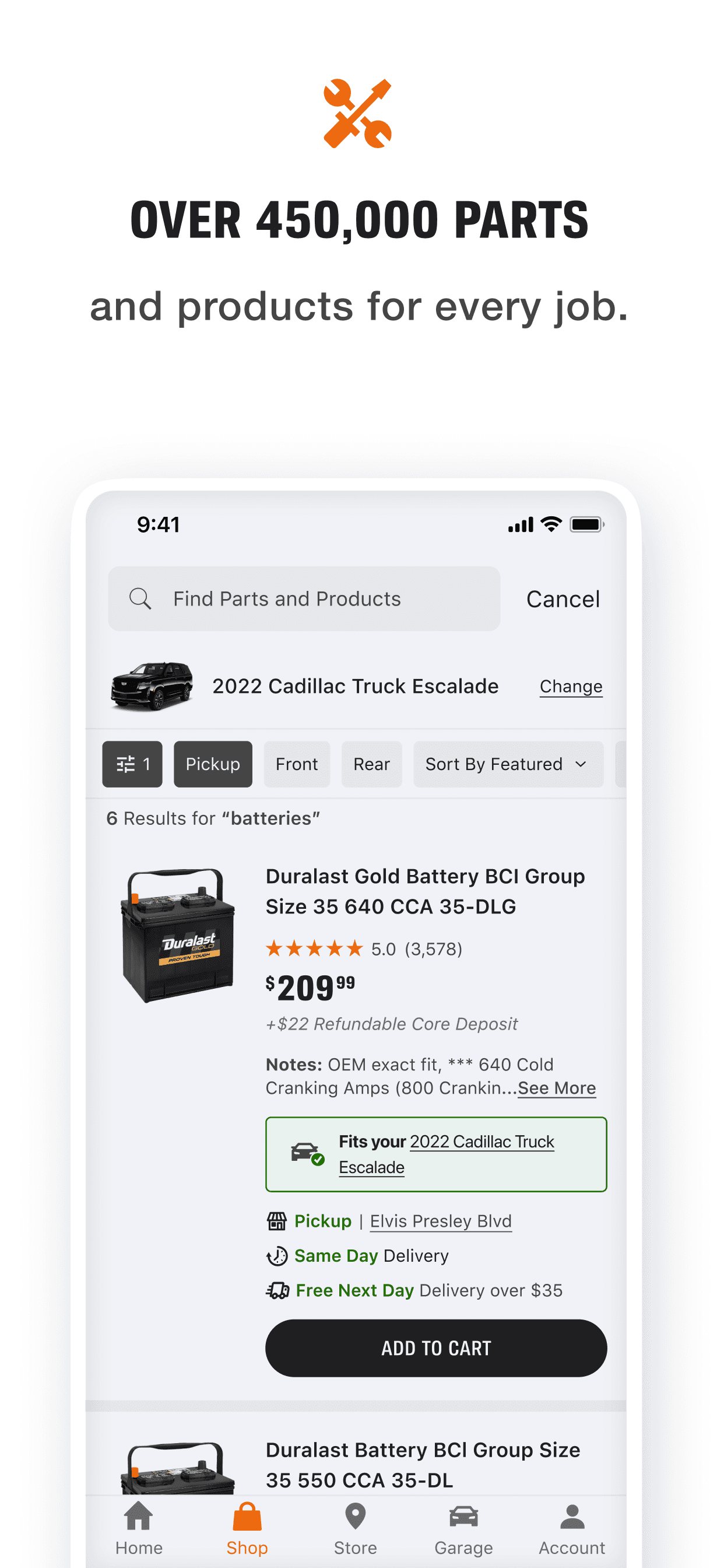
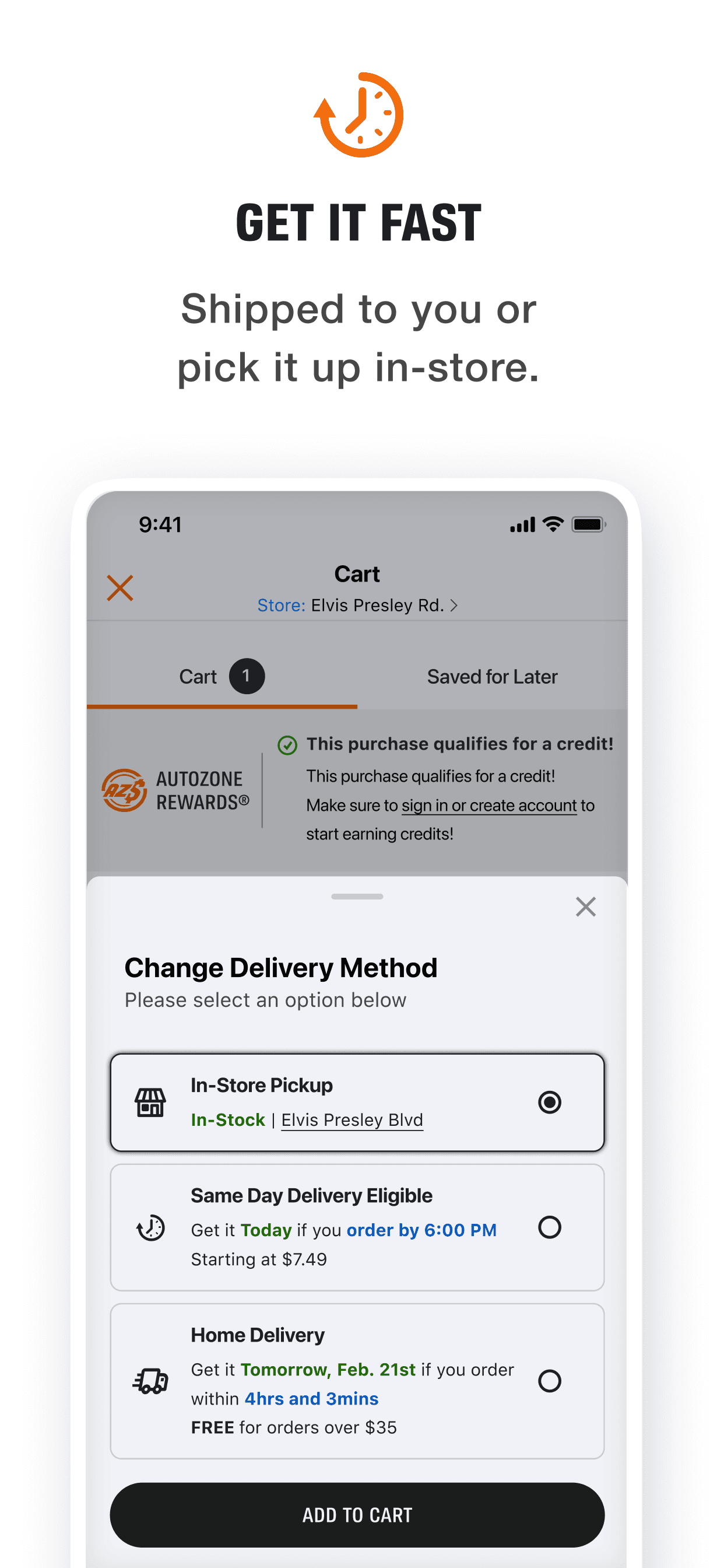
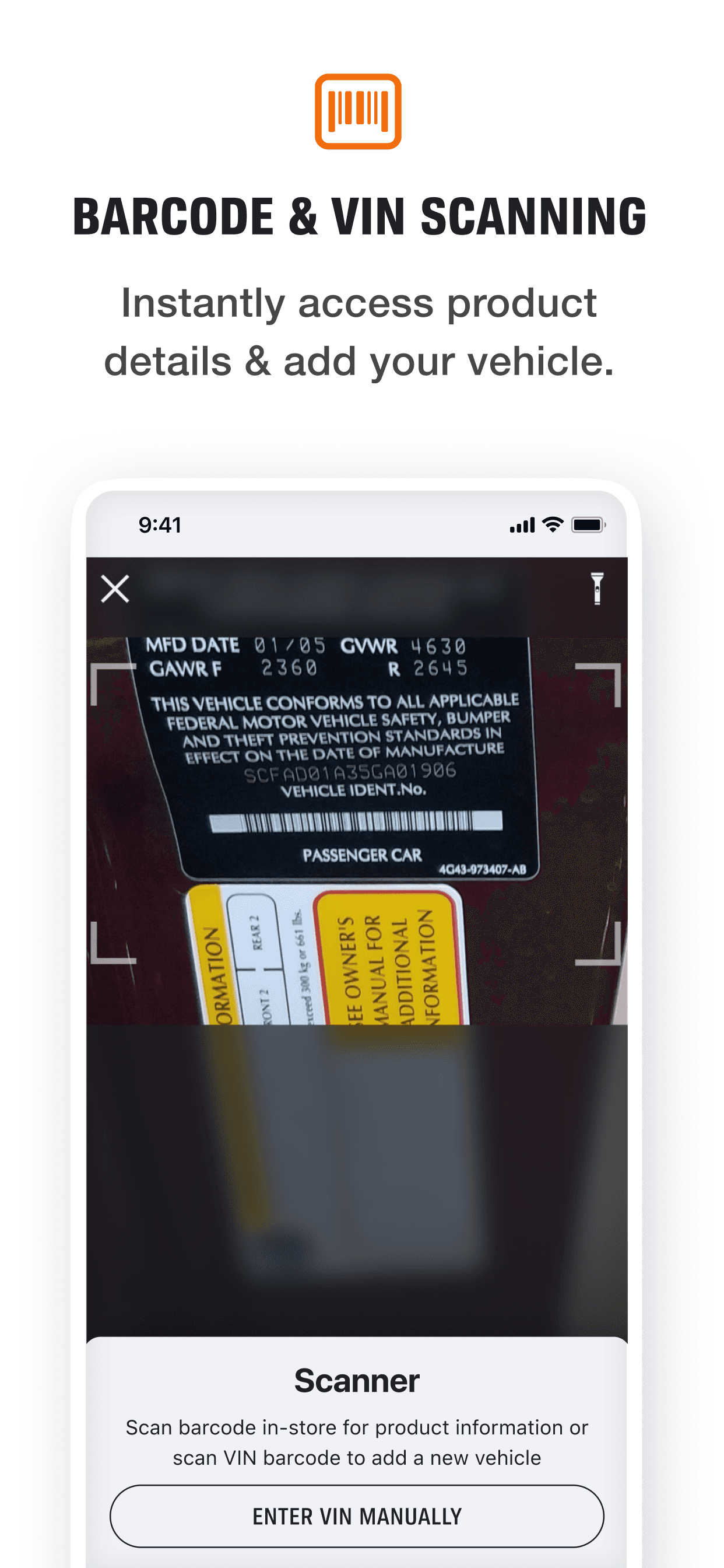
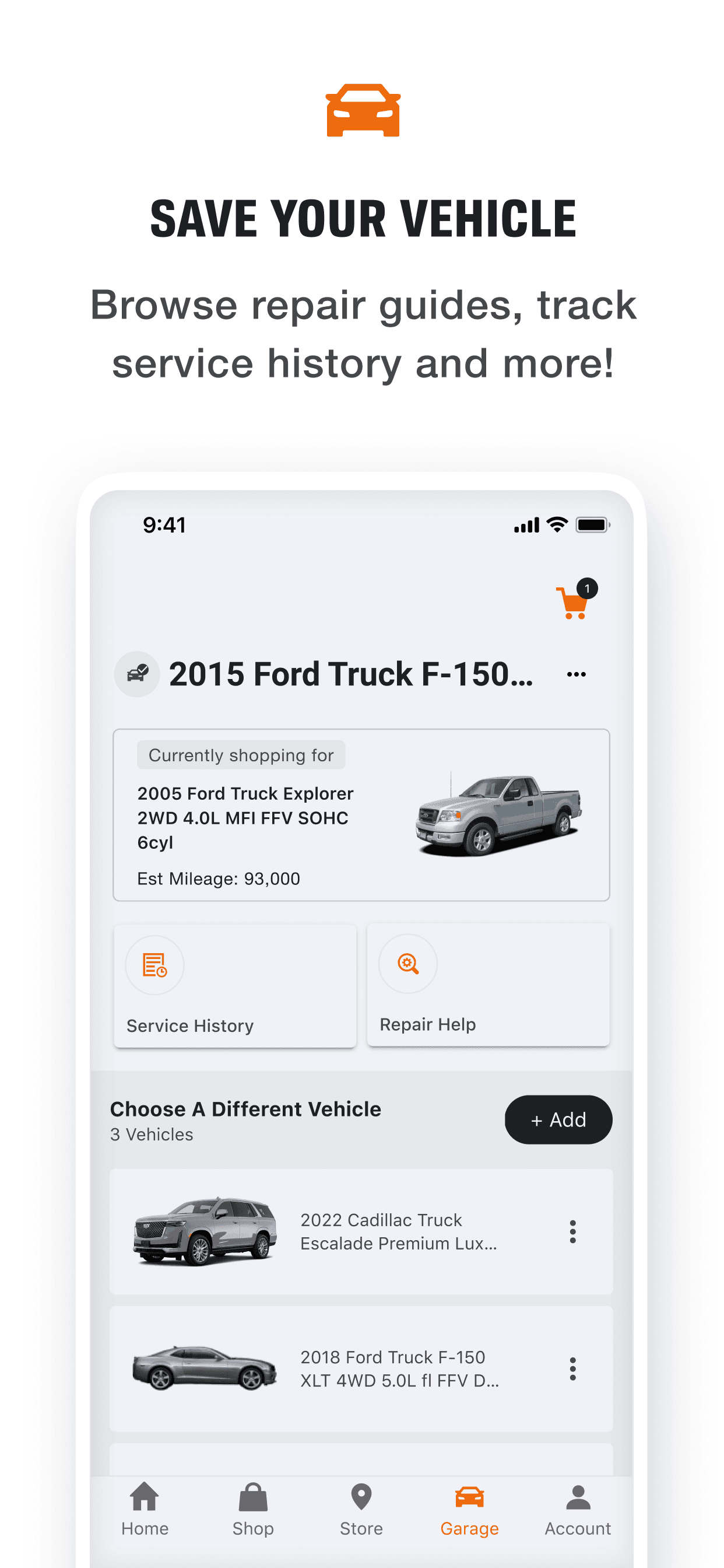
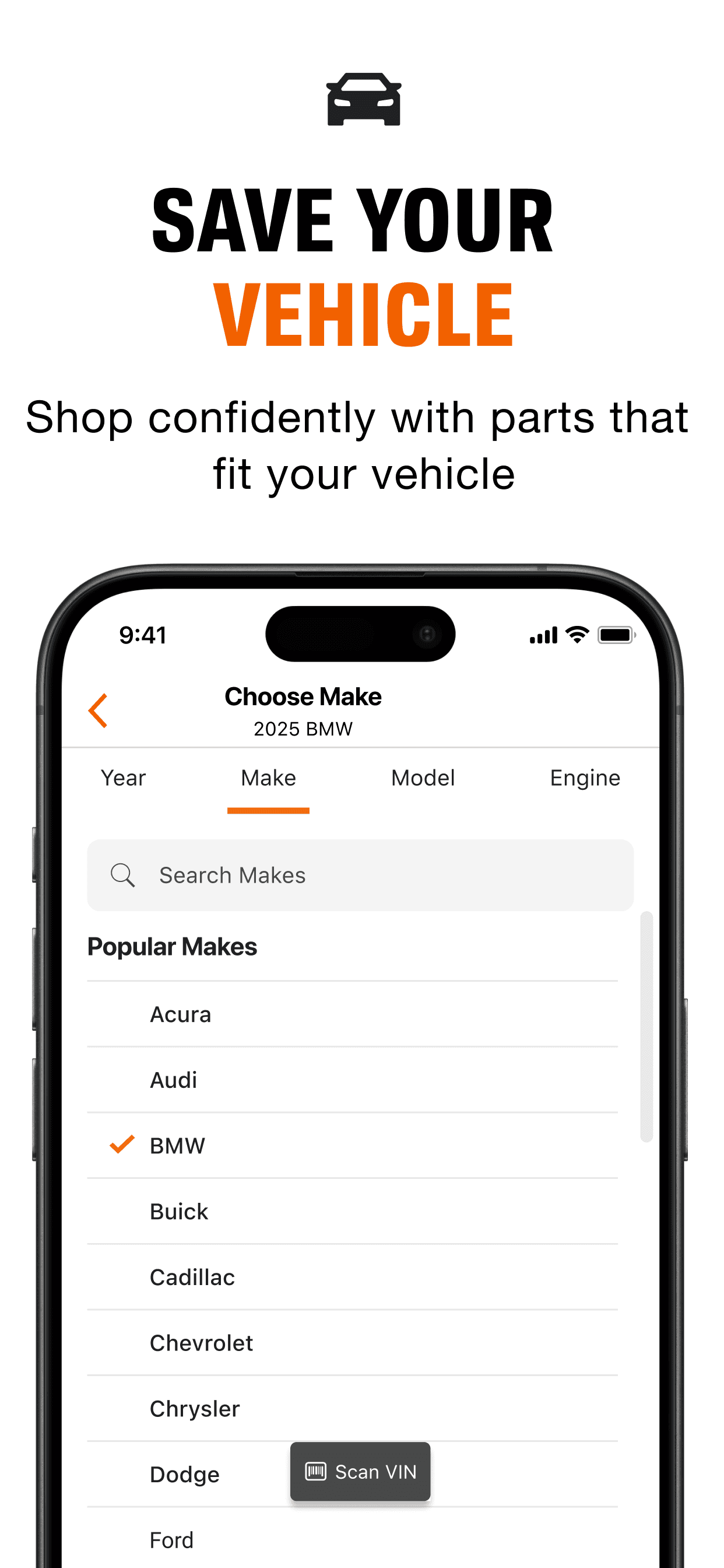
Users previewing the AutoZone app on the store couldn't quickly grasp why to download it, or how it would save them time and money. The value proposition was buried, the strongest reasons to convert went unsaid, and the listing wasn't working hard enough to be found or understood.
Key gaps identified
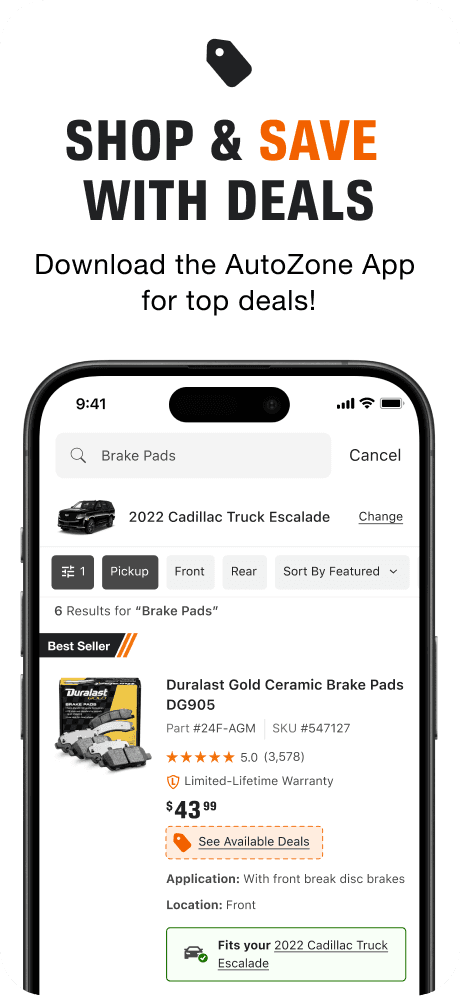
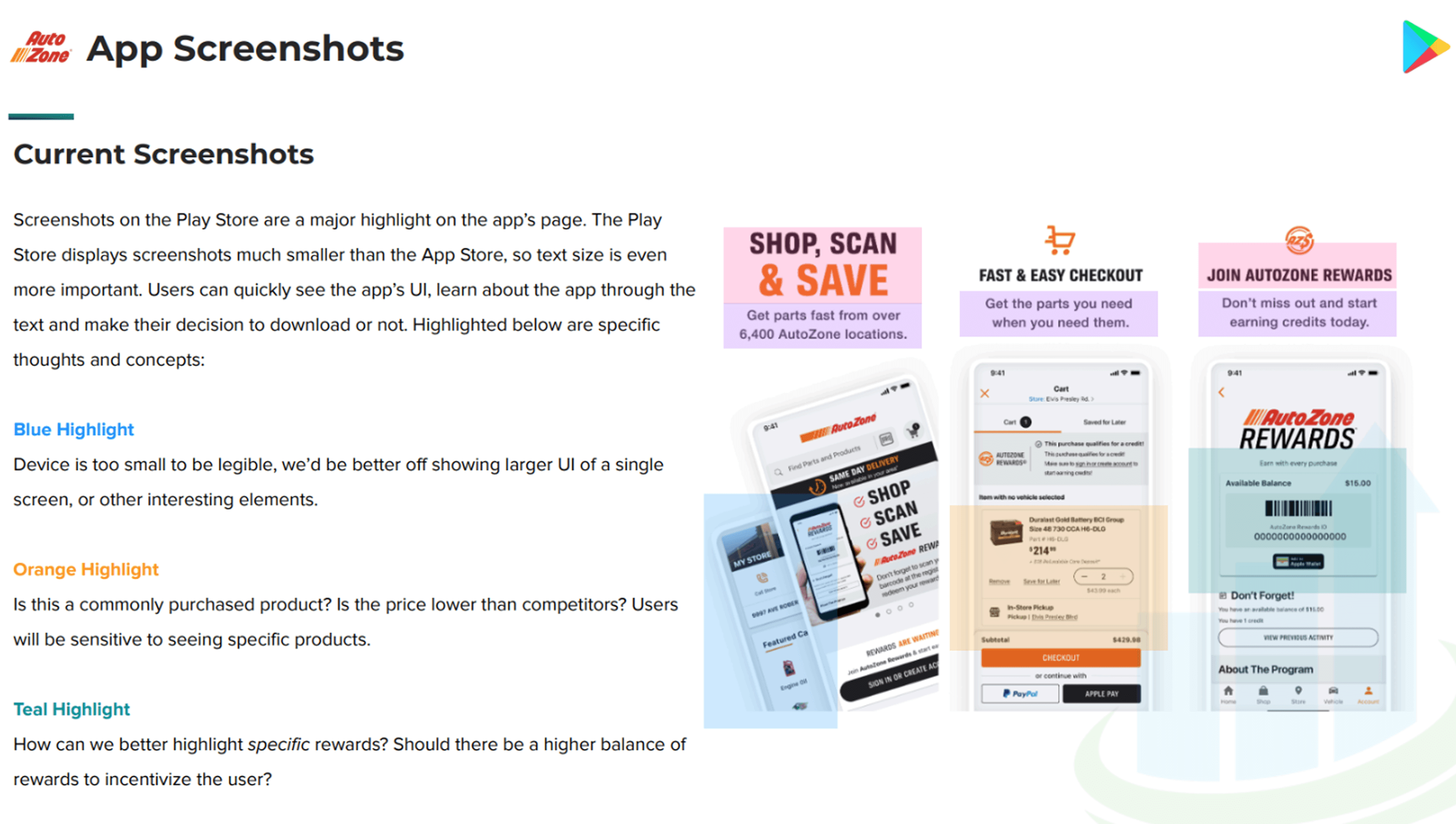
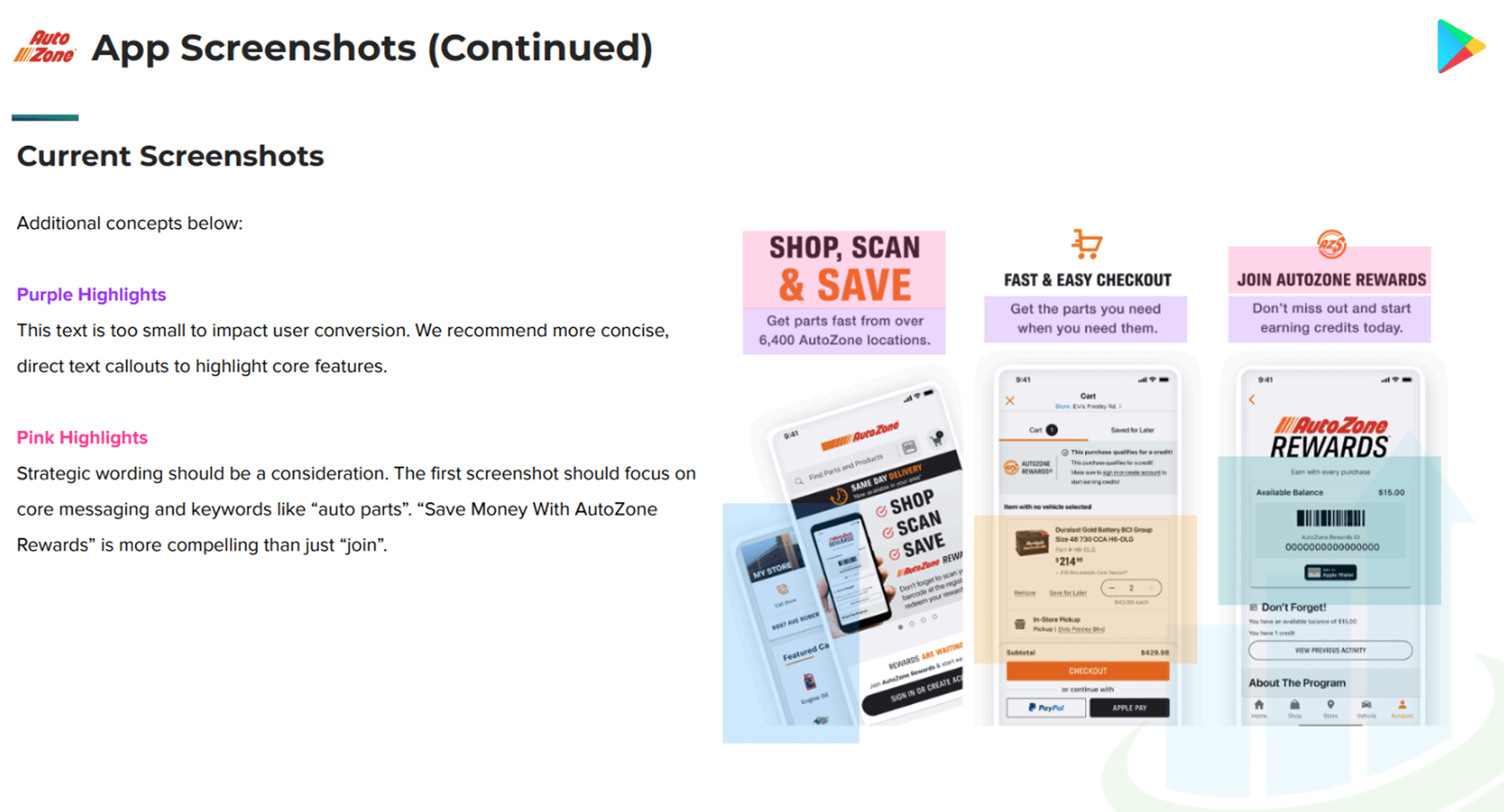
Value proposition unclear in the first three screenshots, the highest-impact real estate for conversion.
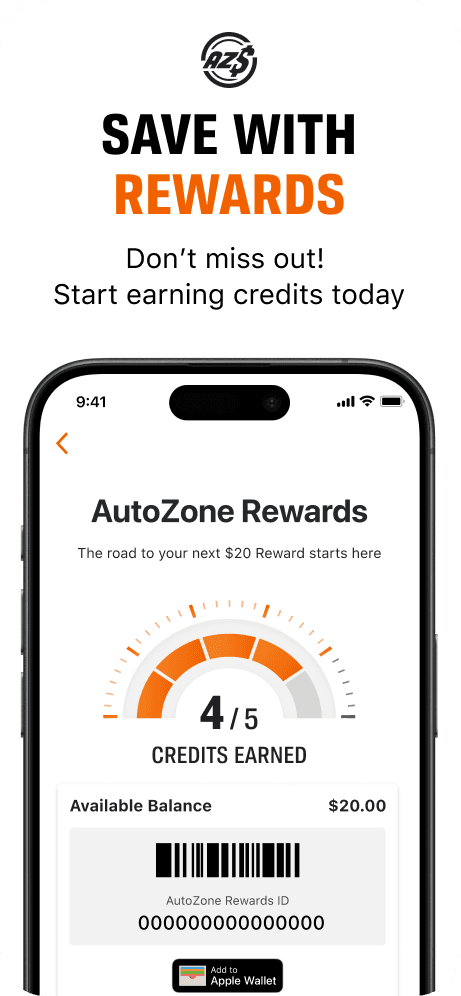
Rewards and pricing benefits under-represented, leaving the strongest reasons to download unsaid.
Limited use of non-brand SEO keywords like "auto parts" and "delivery," narrowing organic discoverability.
Legibility breaking down at thumbnail size, where most browsing decisions are actually made.
Platform-specific store conventions not fully leveraged, leaving proven best practices on the table.
Original Designs
03 • Objective ——————
Success Metrics
Improve SEO, store conversion, and perceived value by sharpening screenshot clarity, messaging, and visual storytelling.
Success metrics
Higher store conversion rate
Improved keyword relevance and rankings
Stronger alignment between preview assets and core product value
The customer outcome behind the metrics: a browsing customer should understand the app's value in seconds and feel confident enough to download.
04 • Research & Insights ——————
App Store Optimization Audit
What was working: strong ratings and reviews, a competitive screenshot baseline, and established brand trust.
Where the opportunity was: expanding beyond brand keywords, improving NLAI confidence (especially on Google Play), A/B testing screenshot messaging and layout, introducing video previews, and optimizing platform-specific formats (CPPs, CSLs, tags).
Behavioral insights
Users scan store screenshots in seconds, and the first three images carry the install decision. Rewards, savings, and speed are what move them most, and any text has to stay readable at thumbnail size to do its job.
05 • Design Strategy ——————
I structured the assets as a conversion funnel, with each stage carrying one job:
06 • Solution ——————
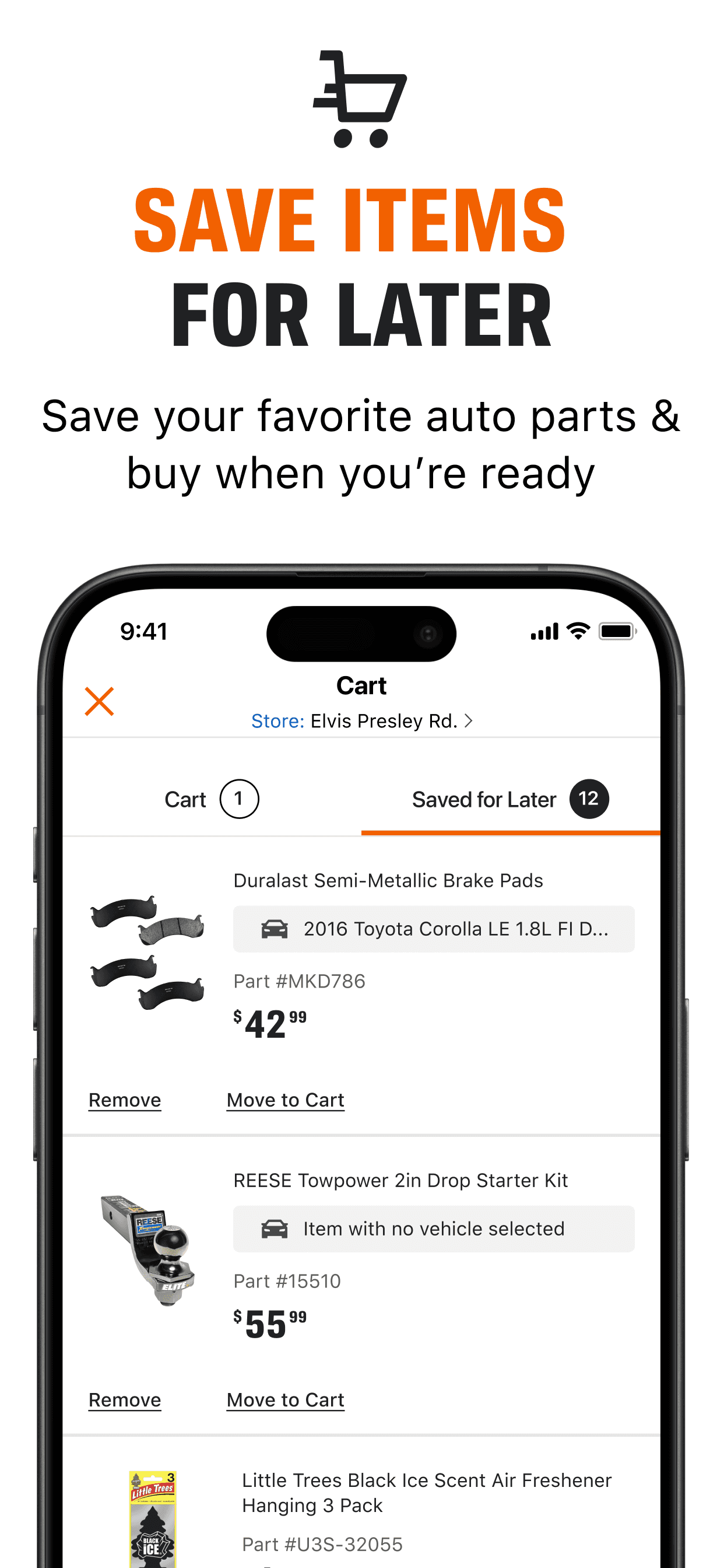
SEO Aligned Copy
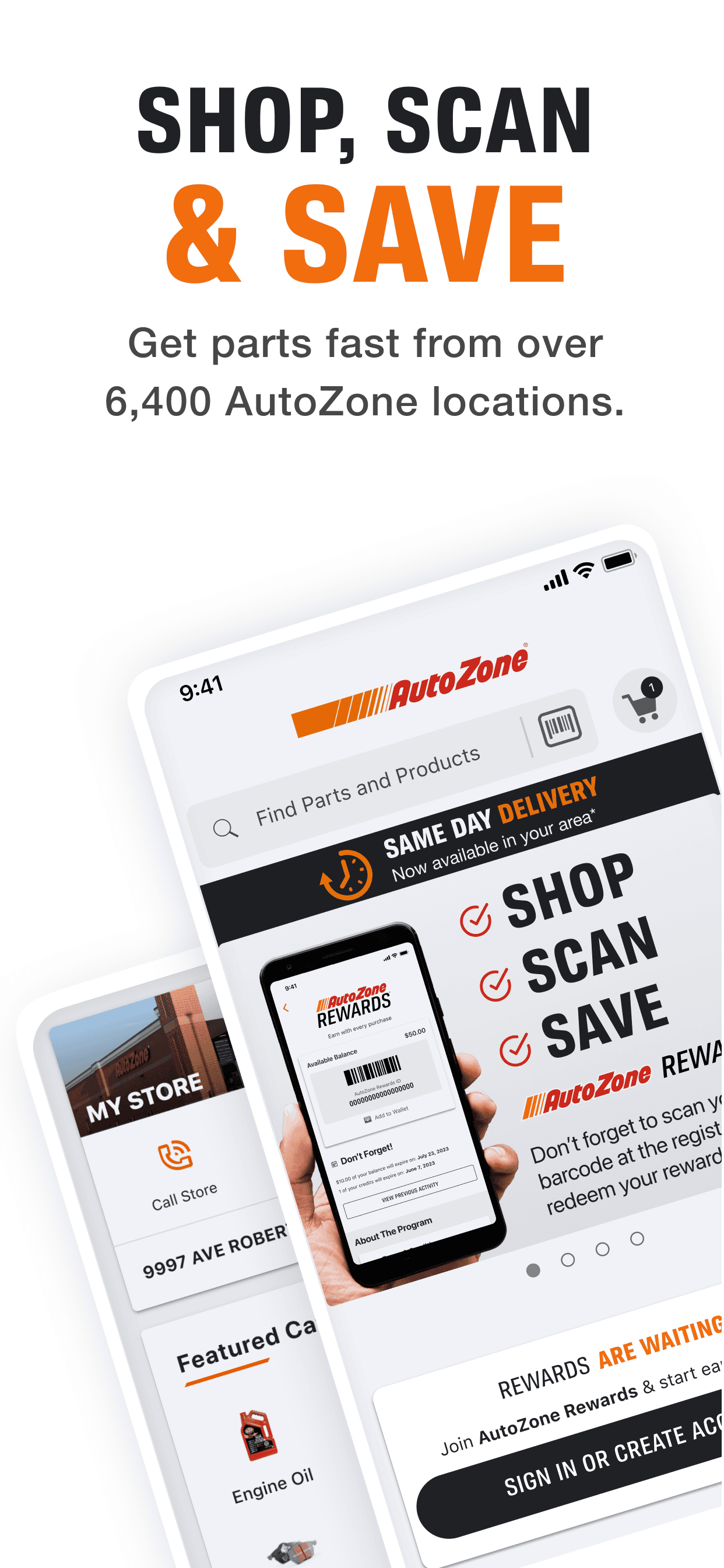
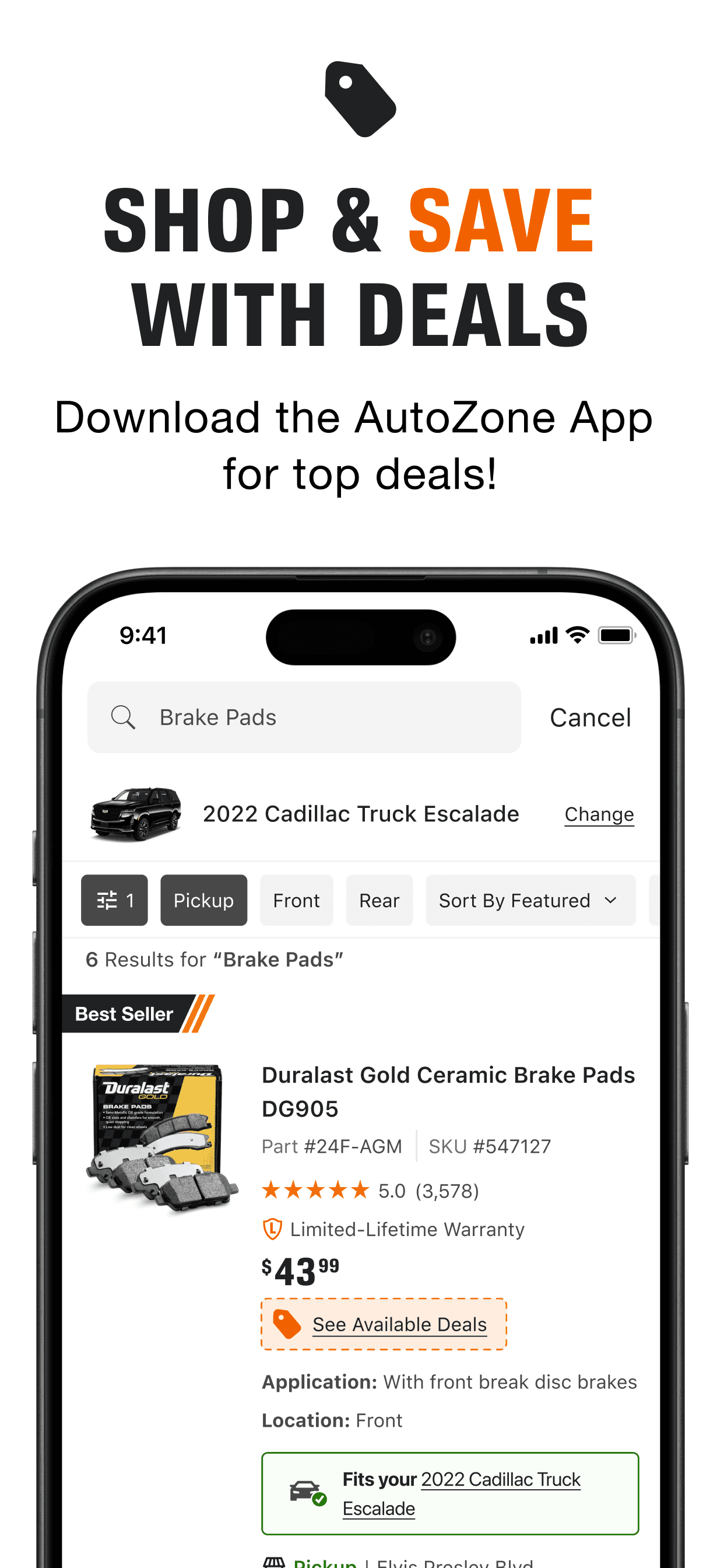
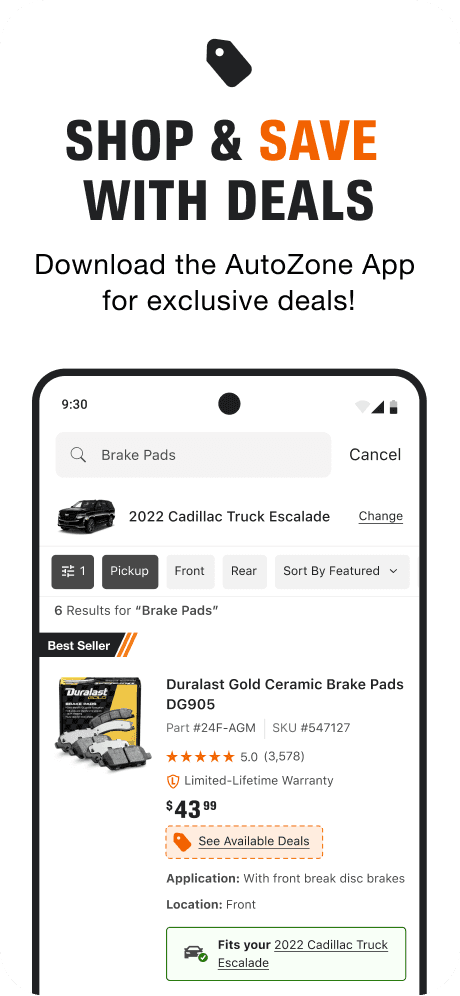
Prioritized high-intent, non-brand keywords across the first three screenshots: auto parts, car parts, rewards, delivery, save.
Example headlines:
"Save More on Auto Parts"
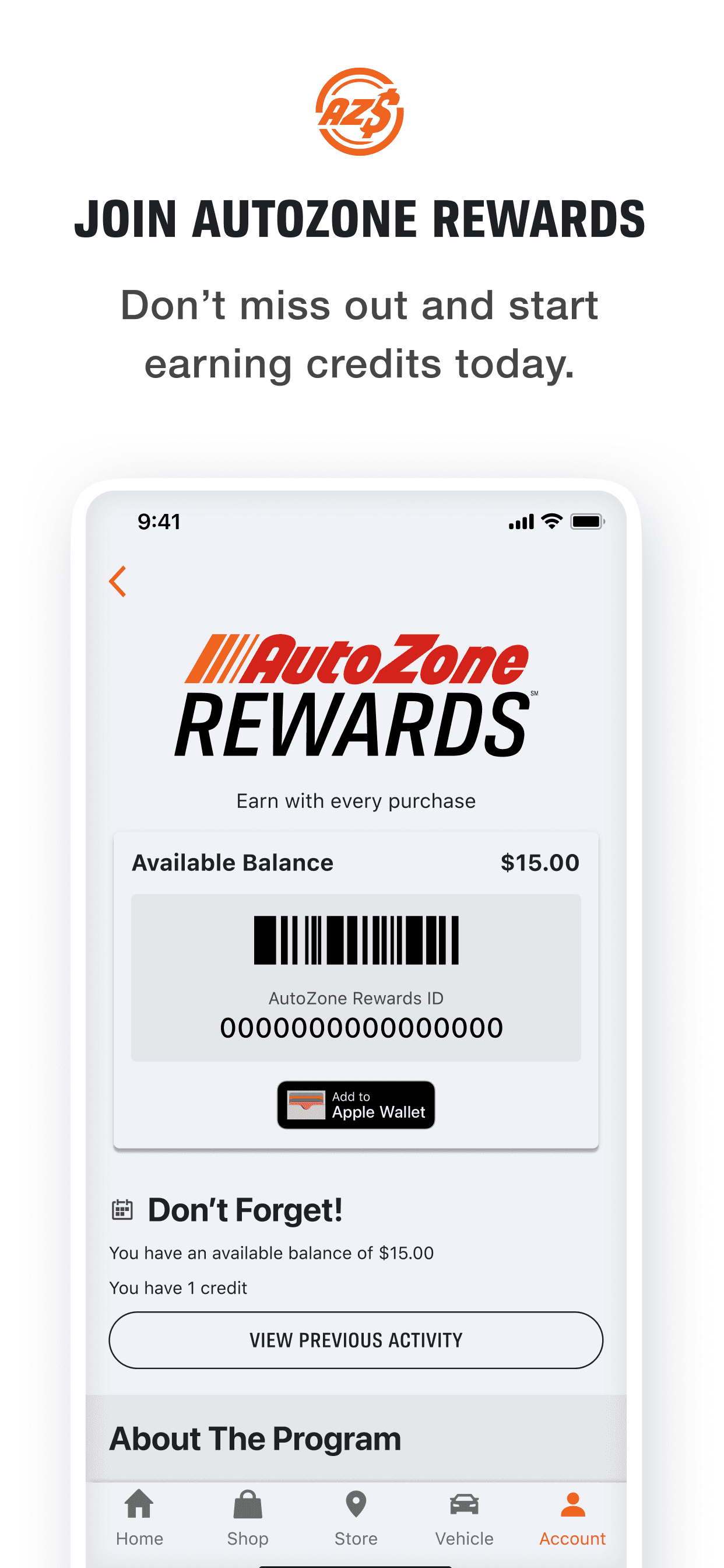
"Earn Rewards Every Time You Shop"
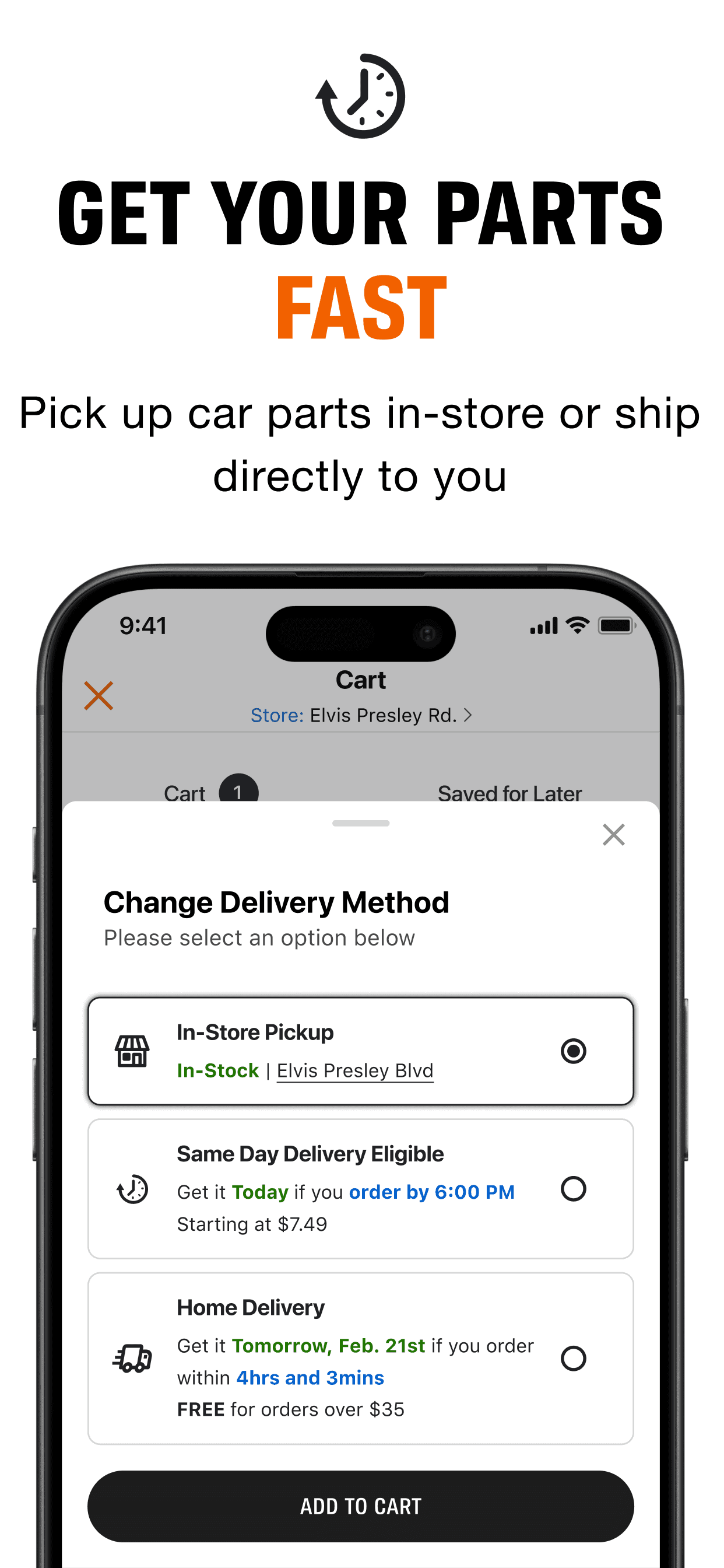
"Fast Delivery from 6,000+ Locations"
"Real Prices. Real Savings."
Rewards and pricing visibility
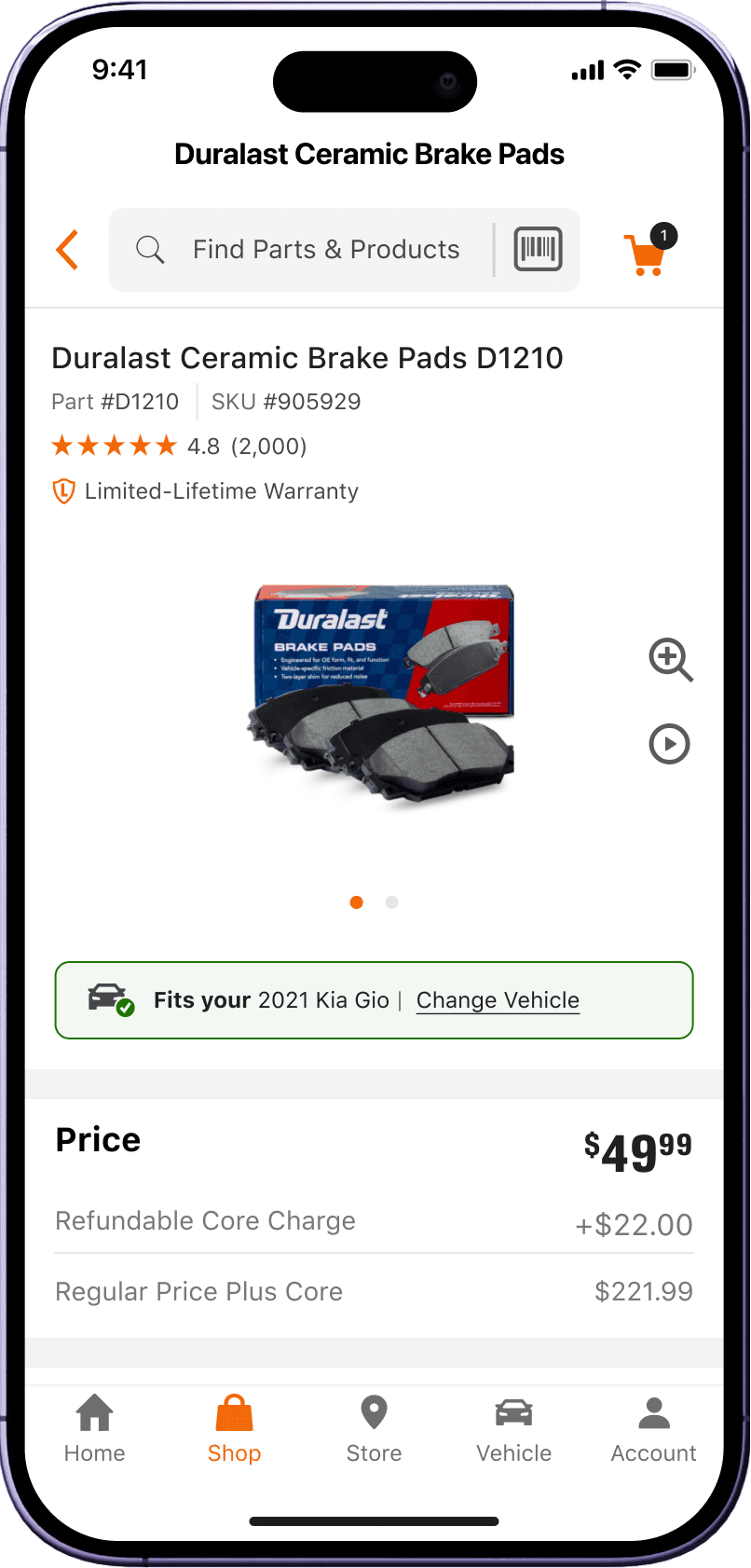
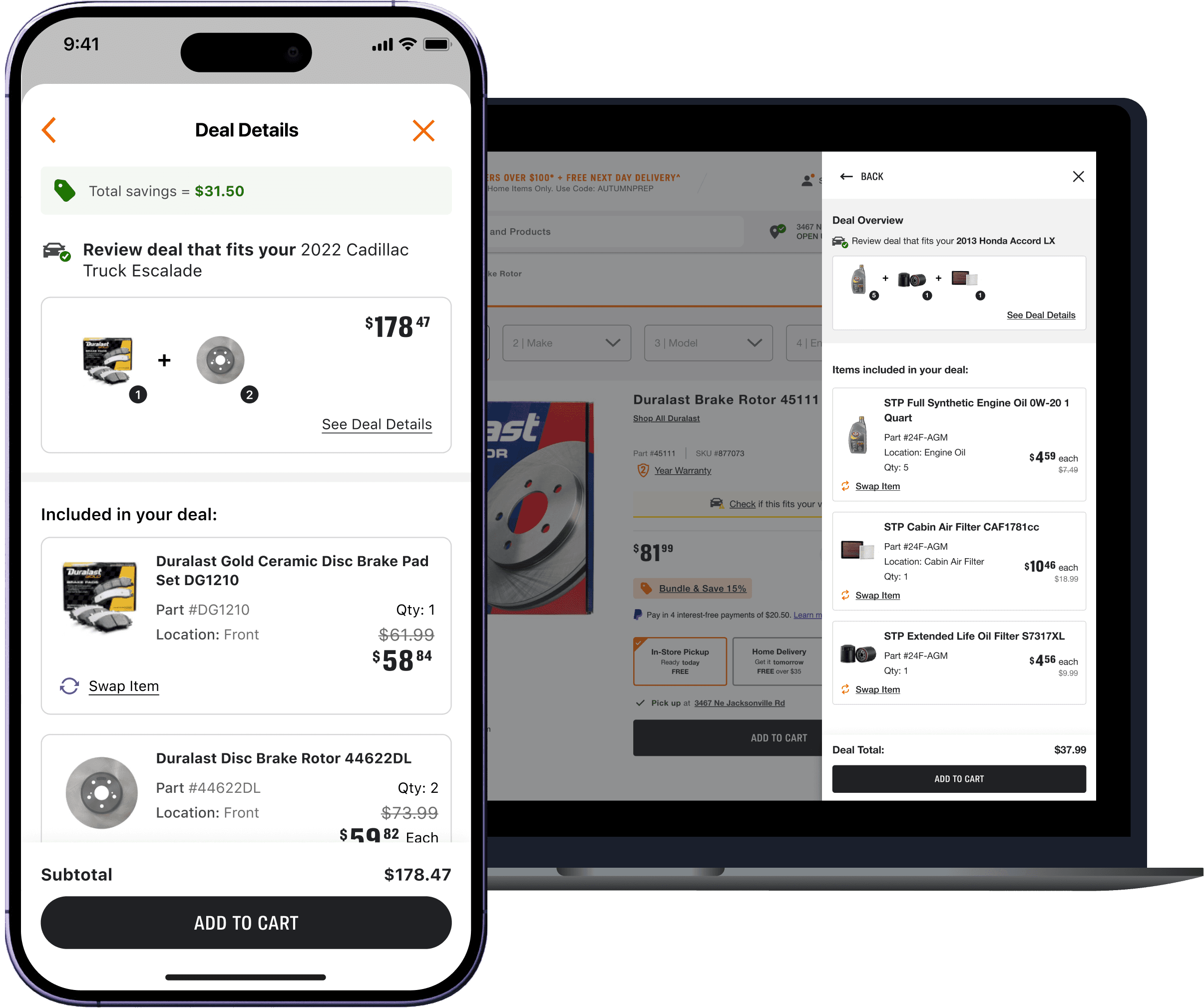
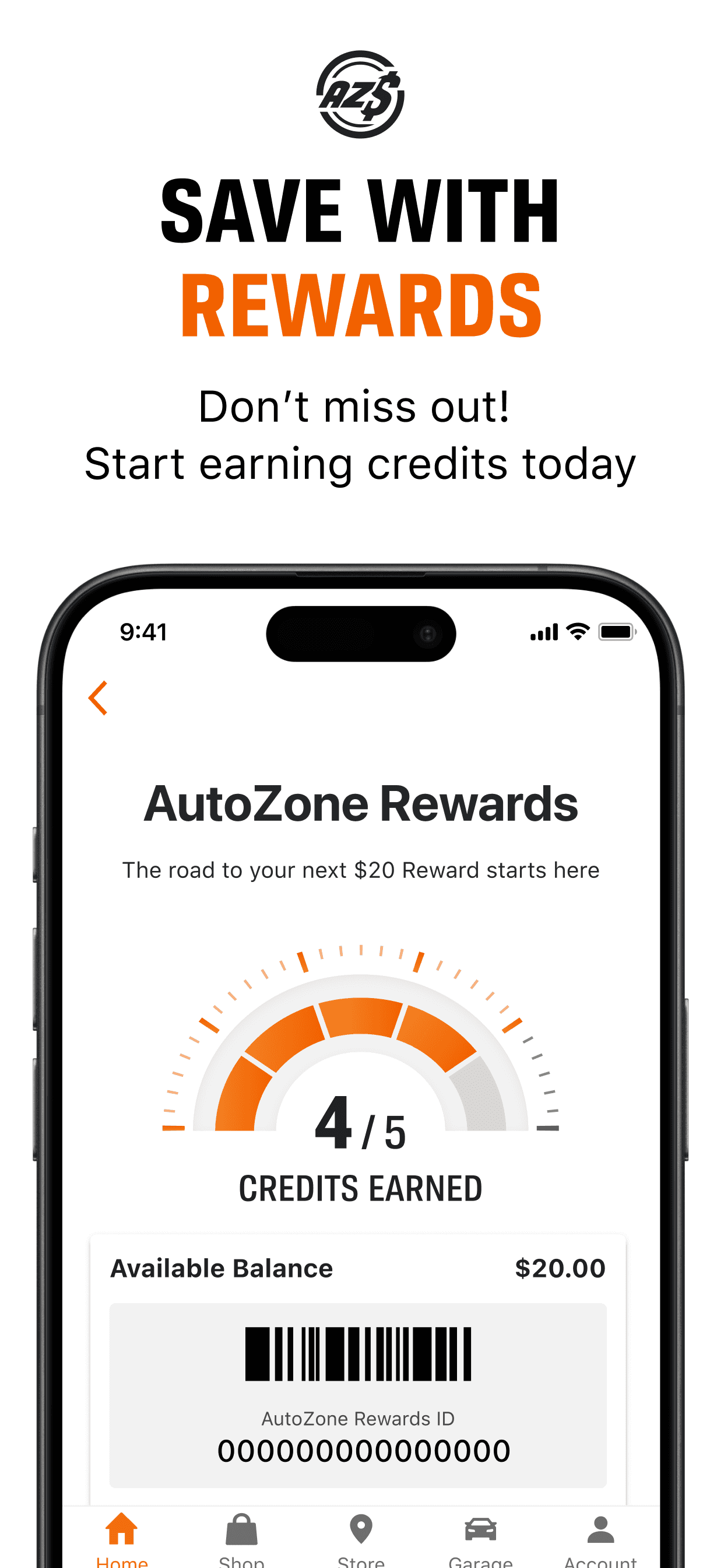
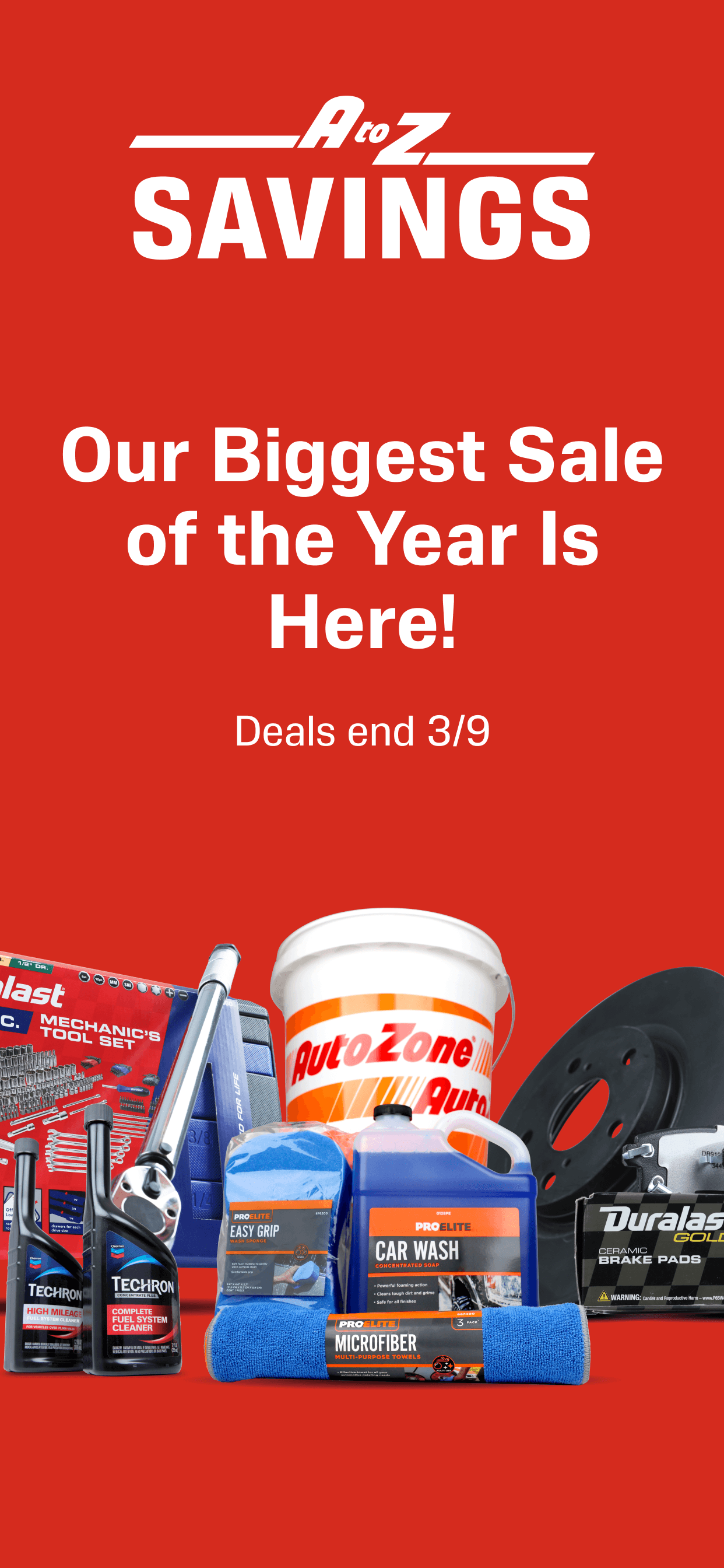
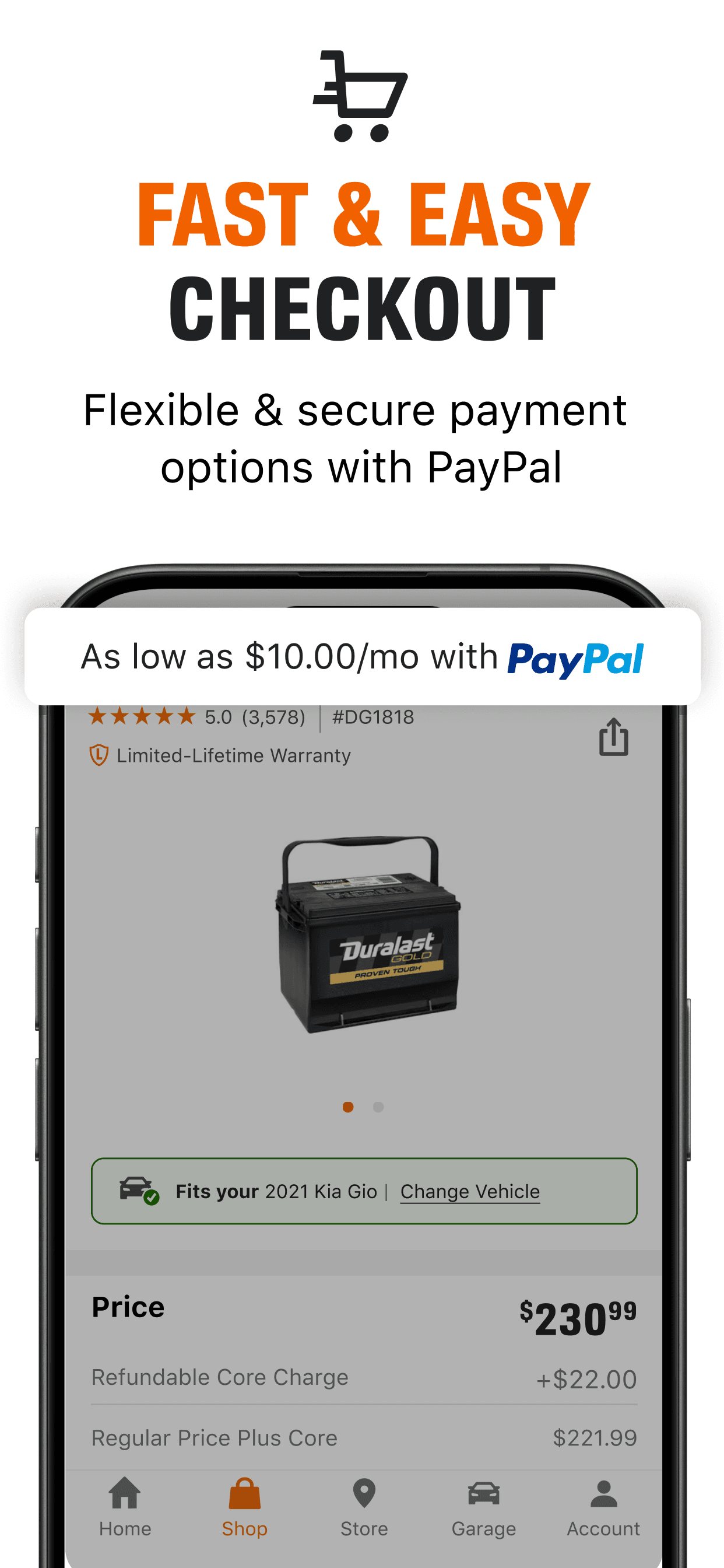
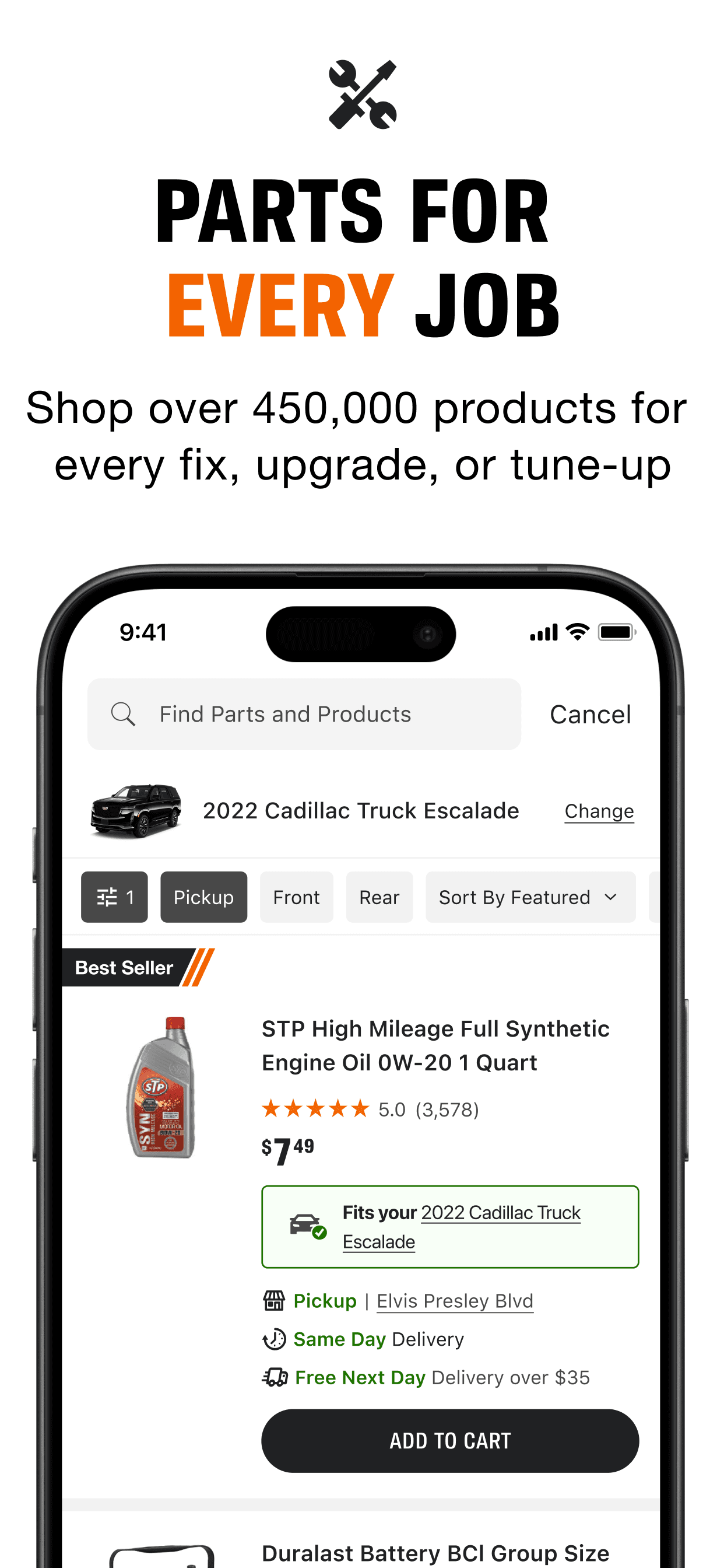
Elevated rewards from a buried feature to a core value proposition, reinforced visually with reward balances, progress bars toward credits, and clear pricing context. Best-selling and top-deal products kept the messaging broadly relevant.
Messaging examples: "Save Money With Rewards," "Earn Credits Every Time You Shop," "Unlock Exclusive Discounts."
Platform-specific design
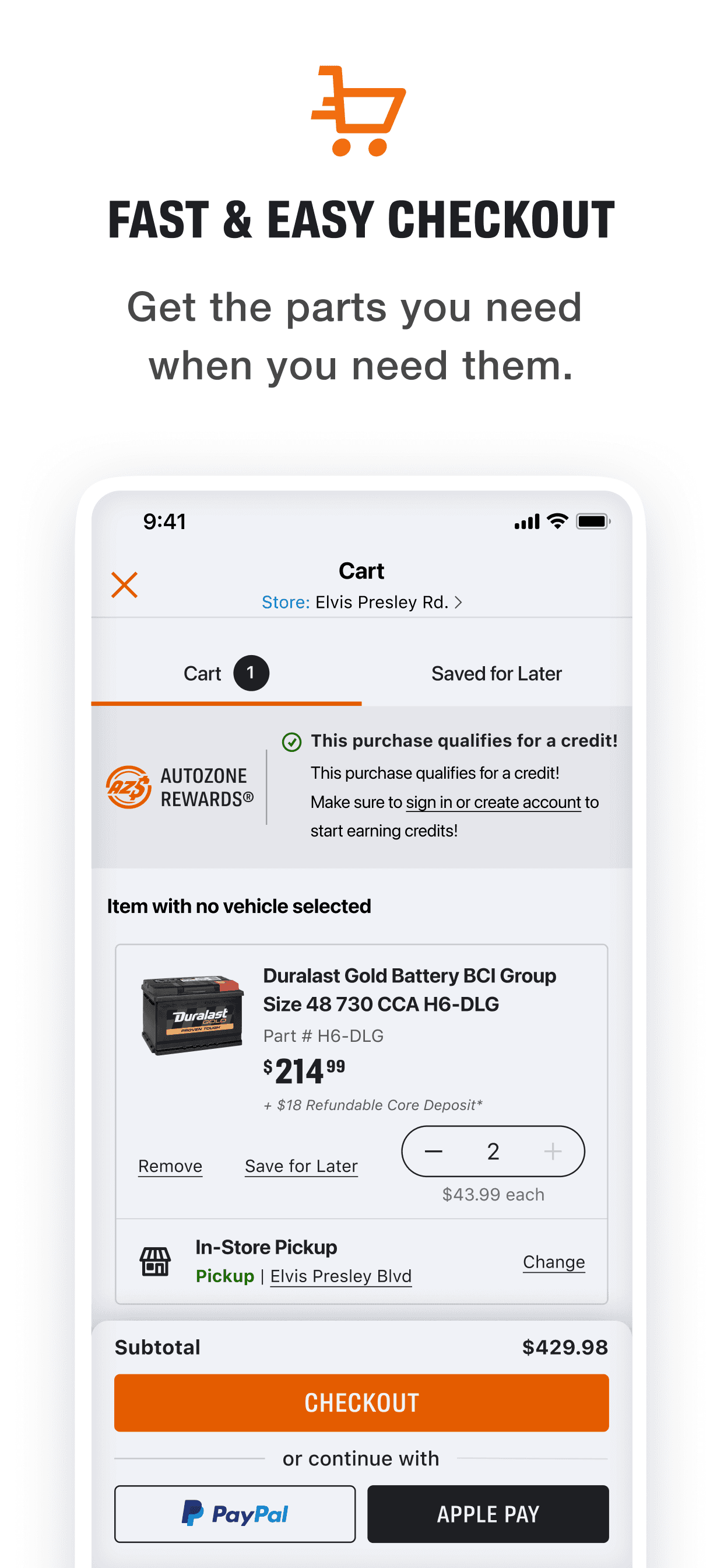
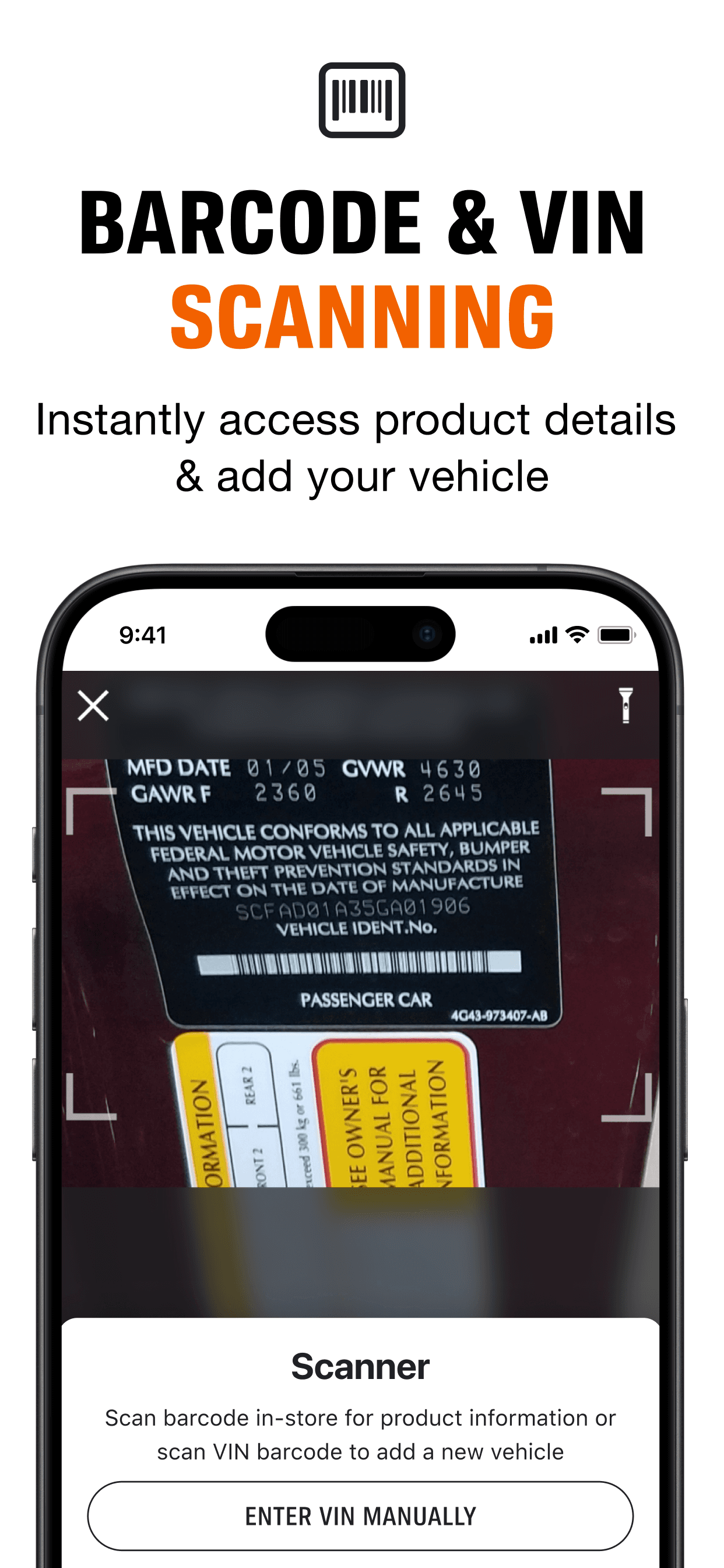
Google Play: large UI crops, bold high-contrast typography, fewer words per screen, optimized for small-thumbnail scanning.
Apple App Store: panoramic storytelling, split-screen compositions, and feature narratives carried across the carousel.
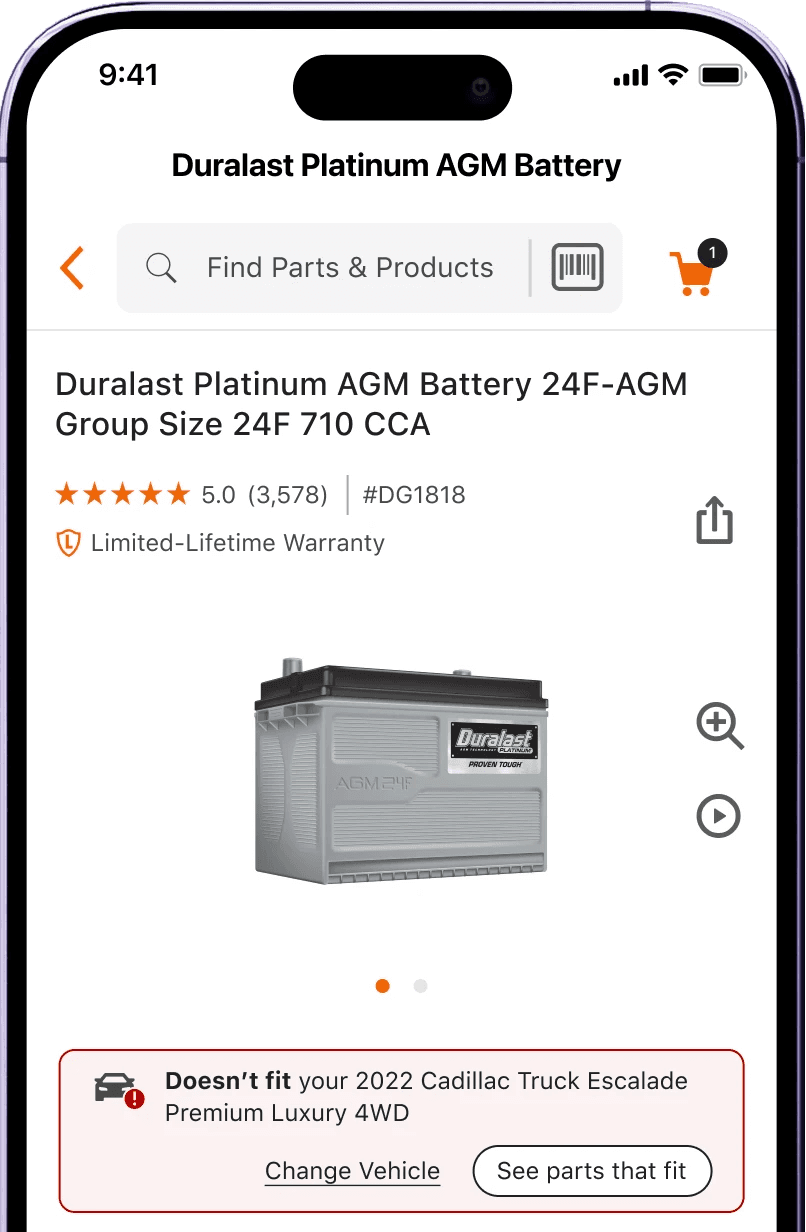
Device accuracy: corrected hardware frames (no Android shells on iOS), larger phone sizes for legibility, and subtle shadows for depth and polish.
07 • Collaboration ——————
Collaboration
This was a cross-functional effort, and I coordinated across four partners:
SEO on keyword validation and compliance.
Marketing on brand consistency and promotional alignment.
Legal on claims review around fit and guarantees.
ASO vendor on testing strategy and reporting
I designed all copy variations to be modular, so the system could iterate quickly as keywords evolved. As well as graphic designs for each asset.
08 • Testing & Measurement ——————
Testing & Measurement
The plan ran A/B tests across three variables: rewards-led versus pricing-led messaging, UI-first versus benefit-first screenshots, and headline language variations.
We measured install conversion rate, keyword movement, and video engagement where implemented.

09 • Key Learnings & Impact ——————
Key Learnings & Impact
App Store Optimization is a UX problem, not just a marketing one. Legibility beats complexity, rewards have to be shown visually to feel real, and platform nuances meaningfully shape perceived quality.
Expected Impact
Clearer value communication within seconds of viewing the listing
Improved non-brand keyword relevance
Higher store conversion rates
A scalable system for seasonal updates and feature launches
10 • What's Next ——————
What's Next
Launch the optimized screenshot variants.
Test video previews incrementally.
Plan quarterly asset refreshes aligned to search improvements, PDP enhancements, and rewards and delivery updates.