
Cross-Functional Partners: Web Designers / UXR / Analytics / Marketing / Back-end Devs / Front-end Devs / Product Owners / Product Managers / Merchandise / Scrum Master
01 • The Problem ——————
01 • The Problem ——————
AutoZone.com had a deals experience.
AutoZone.com had a deals experience.
But it lacked an updated deals strategy.
But it lacked an updated deals strategy.
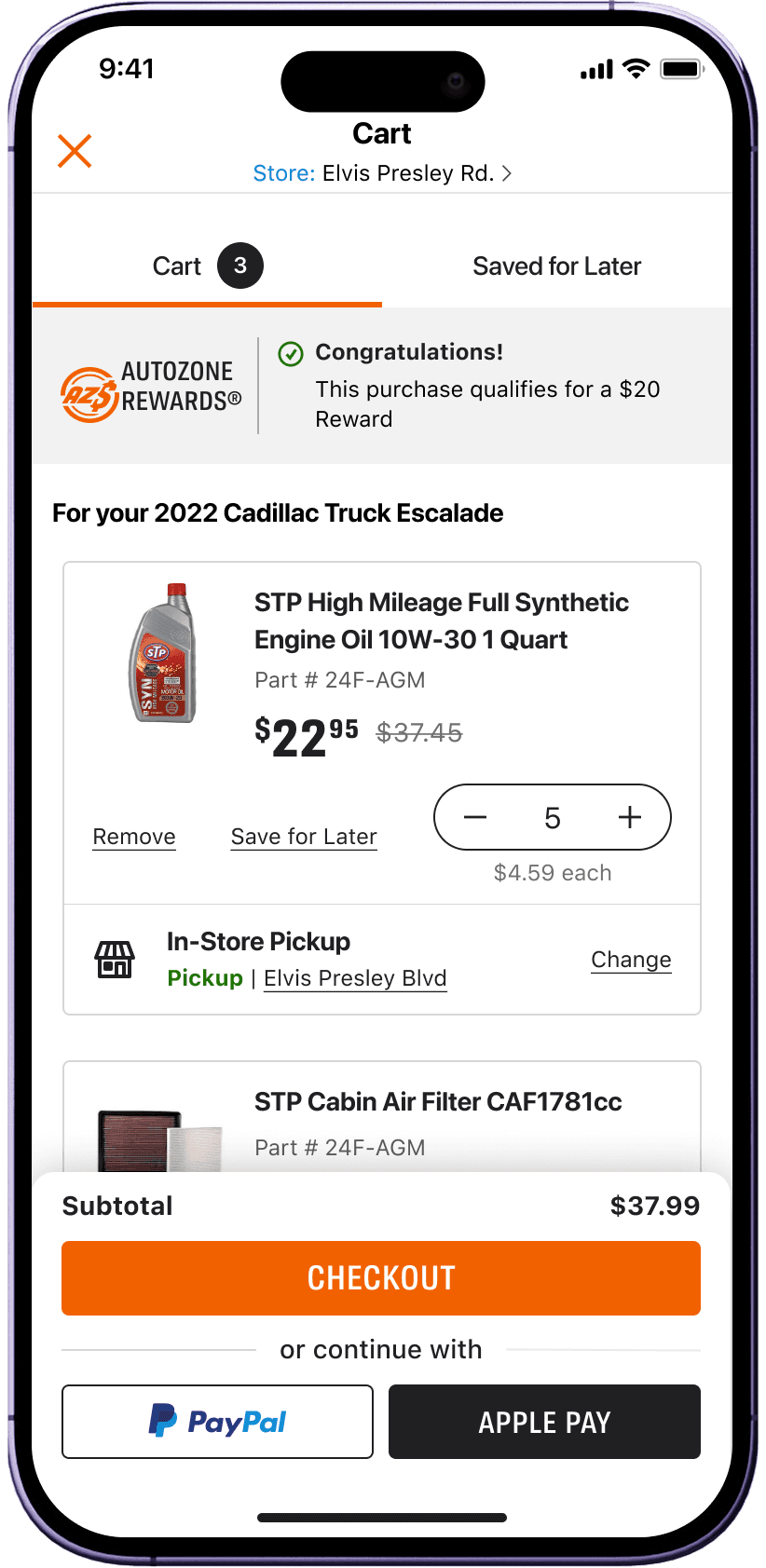
Millions of customers use AutoZone's website every week. Yet, none of them had an intuitive way to find, understand, or activate a deal.
The surface problem was a fragmented UI. The real problem was deeper: customers didn't trust the deals, didn't understand what was included, and often didn't know they missed one until it was too late.
In a cost-sensitive DIY market where competitors were getting sharper, this wasn't a UX debt issue. It was a revenue and retention risk.
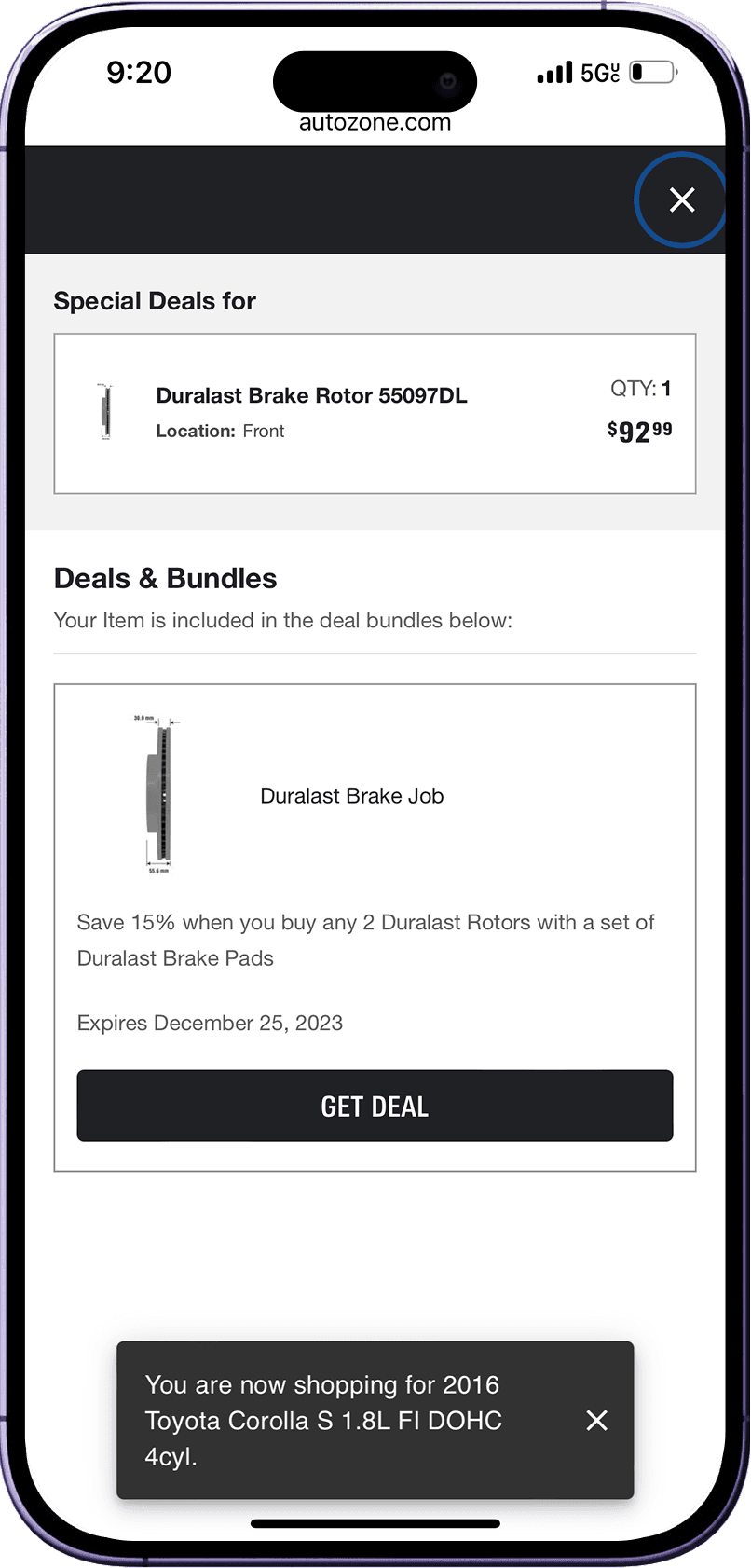
Previous Website deals drawer design
Previous Website deals drawer design
Previous Website deals drawer design
Pain Points
Most customers missed deals entirely.
Only 12% of users recognized the deal badge as actionable.
Vague deal language eroded trust at peak purchase intent.
No savings experience on the mobile app (a channel used by millions).
Users were confused on their deal items when they bought online & picked up in store (BOPUS).
Most customers missed deals entirely.
Only 12% of users recognized the deal badge as actionable.
Vague deal language eroded trust at peak purchase intent.
No savings experience on the mobile app (a channel used by millions).
Users were confused on their deal items when they bought online & picked up in store (BOPUS).
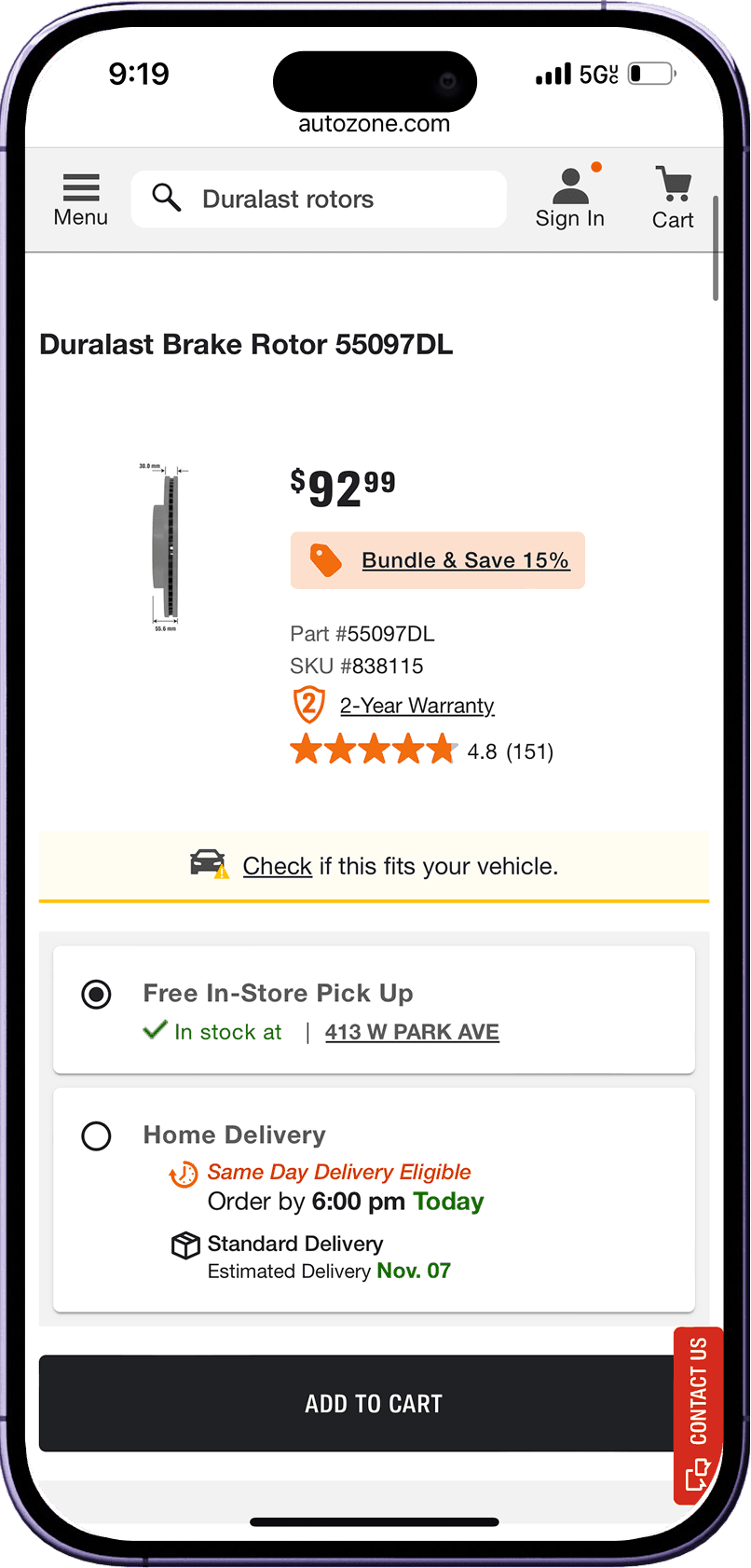
Business Challenges
0.4%
Conversion on web deals
No Deals
Revenue infrastructure on mobile app
Outdated Backend
Deals verbiage was confusing to users
AOV
Mobile app: $96.54
Web: $105.72
Mobile app: $96.54
Web: $105.72
Business Challenges
0.4%
Conversion on web deals
No Deals
Revenue infrastructure on mobile app
Outdated Backend
Deals verbiage was confusing to users
AOV
Mobile app: $96.54
Web: $105.72
02 • Role & Ownership ——————
02 • Role & Ownership —————
I owned this end-to-end
I owned this end-to-end
strategy, design, iteration, and shipping.
strategy, design, iteration, and shipping.
As the sole Senior Product Designer on the mobile app team, I had full ownership of the deals experience audit & redesign across both app and web. From problem framing to shipped product. I set design direction, adjusted to pivots that helped shape the roadmap, and drove alignment across product, engineering, research, and analytics.
I also established the UX patterns that became the foundation of AutoZone's design system going forward. This wasn't an execution role. I was embedded at the strategy level from day one.
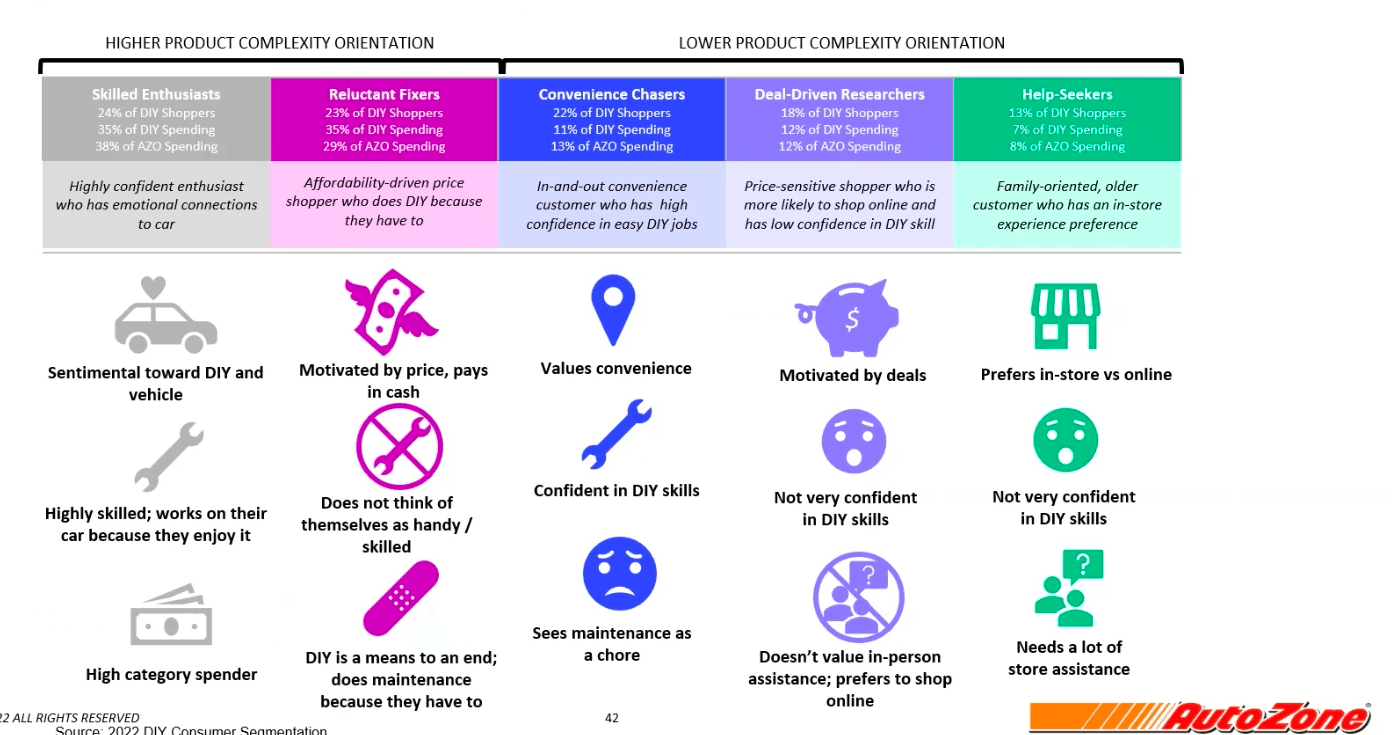
Based on our consumer segmentations, reluctant fixers & deal-driven researchers became our focus.
Based on our consumer segmentations, reluctant fixers & deal-driven researchers became our focus.
My cross-functional strategy
My cross-functional strategy
01 - Research & Synthesis
Defined research agenda with UXR, synthesized user problems, 2 years of data, and analytics into design strategy.
Defined research agenda with UXR, synthesized user problems, 2 years of data, and analytics into design strategy.
02 - Information Architecture
Mapped current vs. future-state flows. Flexible IA that supports multiple deal types.
Mapped current vs. future-state flows. Flexible IA that supports multiple deal types.
03 - Prototyping & Testing
Mid- and hi-fi prototypes for usability testing. Co-developed testing strategy and success measures with UXR.
Mid- and hi-fi prototypes for usability testing. Co-developed testing strategy and success measures with UXR.
04 - HiFi Design System
Cross-platform designs aligned to global design system. New patterns became the standard across both platforms.
04 - HiFi Design System
Cross-platform designs aligned to global design system. New patterns became the standard across both platforms.
05 - Engineering Partnership
Weekly syncs throughout. Dev-ready MVP with annotated acceptance criteria. Technical limitations addressed.
05 - Engineering Partnership
Weekly syncs throughout. Dev-ready MVP with annotated acceptance criteria. Technical limitations addressed.
06 - Phase 2 Roadmap
Scalable component framework with documented recommendations for future deal types beyond MVP.
Scalable component framework with documented recommendations for future deal types beyond MVP.
01 - Research & Synthesis
Defined research agenda with UXR, synthesized user problems, 2 years of data, and analytics into design strategy.
02 - Information Architecture
Mapped current vs. future-state flows. Flexible IA that supports multiple deal types.
03 - Prototyping & Testing
Mid- and hi-fi prototypes for usability testing. Co-developed testing strategy and success measures with UXR.
04 - HiFi Design System
Cross-platform designs aligned to global design system. New patterns became the standard across both platforms.
05 - Engineering Partnership
Weekly syncs throughout. Dev-ready MVP with annotated acceptance criteria. Technical limitations addressed.
06 - Phase 2 Roadmap
Scalable component framework with documented recommendations for future deal types beyond MVP.
03 • Research & Insights ——————
03 • Research & Insights ——————
I built a clear picture of exactly
I built a clear picture of exactly
where and why customers were failing.
where and why customers were failing.
I defined the research agenda alongside UXR and treated every key finding as a design requirement. Not a suggestion.
18-participant unmoderated usability study · 2 years of deals drawer engagement data · funnel analytics · competitive benchmarking (Home Depot, Lowe's, Amazon, Walmart) · Baymard frameworks on pricing transparency.
Vague language breaks trust before the sale starts
Vague language breaks trust before the sale starts
Terms like “Complete Job” led users to assume labor might be included.
Terms like “Complete Job” led users to assume labor might be included.
Terms like “Complete Job” led users to assume labor might be included.
01 • Design Decision ——————
01 • Design Decision ——————
01 • Design Decision
Use plain language that explicitly states what the bundle includes.
Use plain language that explicitly states what the bundle includes.
The #1 friction point: users didn’t know how to apply a deal.
The #1 friction point: users didn’t know how to apply a deal.
Many believed deals would auto‑apply or didn’t realize the badge was actionable.
Many believed deals would auto‑apply or didn’t realize the badge was actionable.
Many believed deals would auto‑apply or didn’t realize the badge was actionable.
02 • Design Decision ——————
02 • Design Decision ——————
02 • Design Decision
Three activation points across shelf, PDP, and cart. This single insight was the primary driver of the 6× conversion lift.
Three activation points across shelf, PDP, and cart. This single insight was the primary driver of the 6× conversion lift.
Comprehension suffers when deal details are hidden or separated.
Comprehension suffers when deal details are hidden or separated.
Separating the deal description, pricing breakdown, and CTA, even slightly caused measurable drops in task completion.
Customers needed all three in immediate proximity to decide confidently.
Separating the deal description, pricing breakdown, and CTA, even slightly caused measurable drops in task completion.
Customers needed all three in immediate proximity to decide confidently.
Separating the deal description, pricing breakdown, and CTA, even slightly caused measurable drops in task completion.
Customers needed all three in immediate proximity to decide confidently.
03 • Design Decision ——————
03 • Design Decision ——————
03 • Design Decision
Bring deal description, pricing, and primary actions into tighter proximity with stronger visual hierarchy.
Bring deal description, pricing, and primary actions into tighter proximity with stronger visual hierarchy.
Users were most influenced when deal value was spelled out early.
Users were most influenced when deal value was spelled out early.
Users who saw savings amounts, item inclusions, and pricing context before interacting made faster, more confident decisions.
Those who had to search for it hesitated or left.
Users who saw savings amounts, item inclusions, and pricing context before interacting made faster, more confident decisions.
Those who had to search for it hesitated or left.
Users who saw savings amounts, item inclusions, and pricing context before interacting made faster, more confident decisions.
Those who had to search for it hesitated or left.
04 • Design Decision ——————
04 • Design Decision ——————
04 • Design Decision
Highlight savings, compared value, and included items upfront.
Highlight savings, compared value, and included items upfront.
04 • Role & Ownership ——————
Before design, alignment.
Before design, alignment.
Four principles to guide four teams.
Four principles to guide four teams.
Cross-functional work at this scale fails when teams optimize locally. I established four design principles early, not as guardrails, but as a shared decision-making language. When tradeoffs came up, these gave us a way to resolve them without compromising the strategy.
Simple, transparent, and rewarding
Every touchpoint should reduce uncertainty. If a customer wonders what's included or whether the deal is worth it, the design has failed. The goal is for our customers to feel rewarded for adding deals.
Every touchpoint should reduce uncertainty. If a customer wonders what's included or whether the deal is worth it, the design has failed. The goal is for our customers to feel rewarded for adding deals.
Every touchpoint should reduce uncertainty. If a customer wonders what's included or whether the deal is worth it, the design has failed. The goal is for our customers to feel rewarded for adding deals.
Design reduces cognitive load
Customers shouldn't do mental math to understand a bundle. The design does the comparison work for them, surfacing the right information in the right order so the decision feels obvious, not effortful.
Customers shouldn't do mental math to understand a bundle. The design does the comparison work for them, surfacing the right information in the right order so the decision feels obvious, not effortful.
One mental model, two platforms
The same customer shops on both app and web. If the experience feels different, with different terminology or different flows, trust is lost. Cross-platform consistency isn’t a nice-to-have. It’s a must.
The same customer shops on both app and web. If the experience feels different, with different terminology or different flows, trust is lost. Cross-platform consistency isn’t a nice-to-have. It’s a must.
The same customer shops on both app and web. If the experience feels different, with different terminology or different flows, trust is lost. Cross-platform consistency isn’t a nice-to-have. It’s a must.
Architecture built for what's next
Every pattern we shipped had to support deal types we hadn't designed yet. A scalable architecture isn't just more efficient, it's a business asset. We built it that way from day one.
Every pattern we shipped had to support deal types we hadn't designed yet. A scalable architecture isn't just more efficient, it's a business asset. We built it that way from day one.
Every pattern we shipped had to support deal types we hadn't designed yet. A scalable architecture isn't just more efficient, it's a business asset. We built it that way from day one.
05 • Design Process ——————
05 • Design Process —————
Five phases.
Five phases.
One decision that changed the outcome.
One decision that changed the outcome.
01
01
01
Discovery & Alignment
Discovery & Alignment
Discovery & Alignment
Cross-functional workshop before any pixels. Audited both platforms, documented UX debt, built a shared opportunity map.
Cross-functional workshop before any pixels. Audited both platforms, documented UX debt, built a shared opportunity map.
Cross-functional workshop before any pixels. Audited both platforms, documented UX debt, built a shared opportunity map.
02
02
02
IA & User Flows
IA & User Flows
IA & User Flows
Current vs. future-state flows. Flexible IA for bundles, volume discounts, and promotions — without a redesign each time.
Current vs. future-state flows. Flexible IA for bundles, volume discounts, and promotions — without a redesign each time.
Current vs. future-state flows. Flexible IA for bundles, volume discounts, and promotions — without a redesign each time.
03
03
03
Exploration
Exploration
Exploration
Multiple directions. Card hierarchies, badge affordance, detail page layouts. Chose for comprehension — not aesthetics.
Multiple directions. Card hierarchies, badge affordance, detail page layouts. Chose for comprehension — not aesthetics.
Multiple directions. Card hierarchies, badge affordance, detail page layouts. Chose for comprehension — not aesthetics.
04
04
04
Prototype & Test
Prototype & Test
Prototype & Test
18-participant study. Findings defined the design — activation model, hierarchy, language. Not suggestions. Requirements.
18-participant study. Findings defined the design — activation model, hierarchy, language. Not suggestions. Requirements.
18-participant study. Findings defined the design — activation model, hierarchy, language. Not suggestions. Requirements.
05
05
05
Dev
Delivery
Dev
Delivery
Dev
Delivery
Weekly engineering syncs from the start. Dev-ready specs with annotated acceptance criteria. Minimal ambiguity at handoff.
Weekly engineering syncs from the start. Dev-ready specs with annotated acceptance criteria. Minimal ambiguity at handoff.
Weekly engineering syncs from the start. Dev-ready specs with annotated acceptance criteria. Minimal ambiguity at handoff.
06 • The Solution ——————
A deals system built to be found,
A deals system built to be found,
understood, and trusted everywhere.
understood, and trusted everywhere.
The output wasn't a redesigned screen. It was a unified deal ecosystem: shared mental model, scalable components, and consistent experience across the shelf page, PDP, deals flow, cart, and checkout found on both app and web.
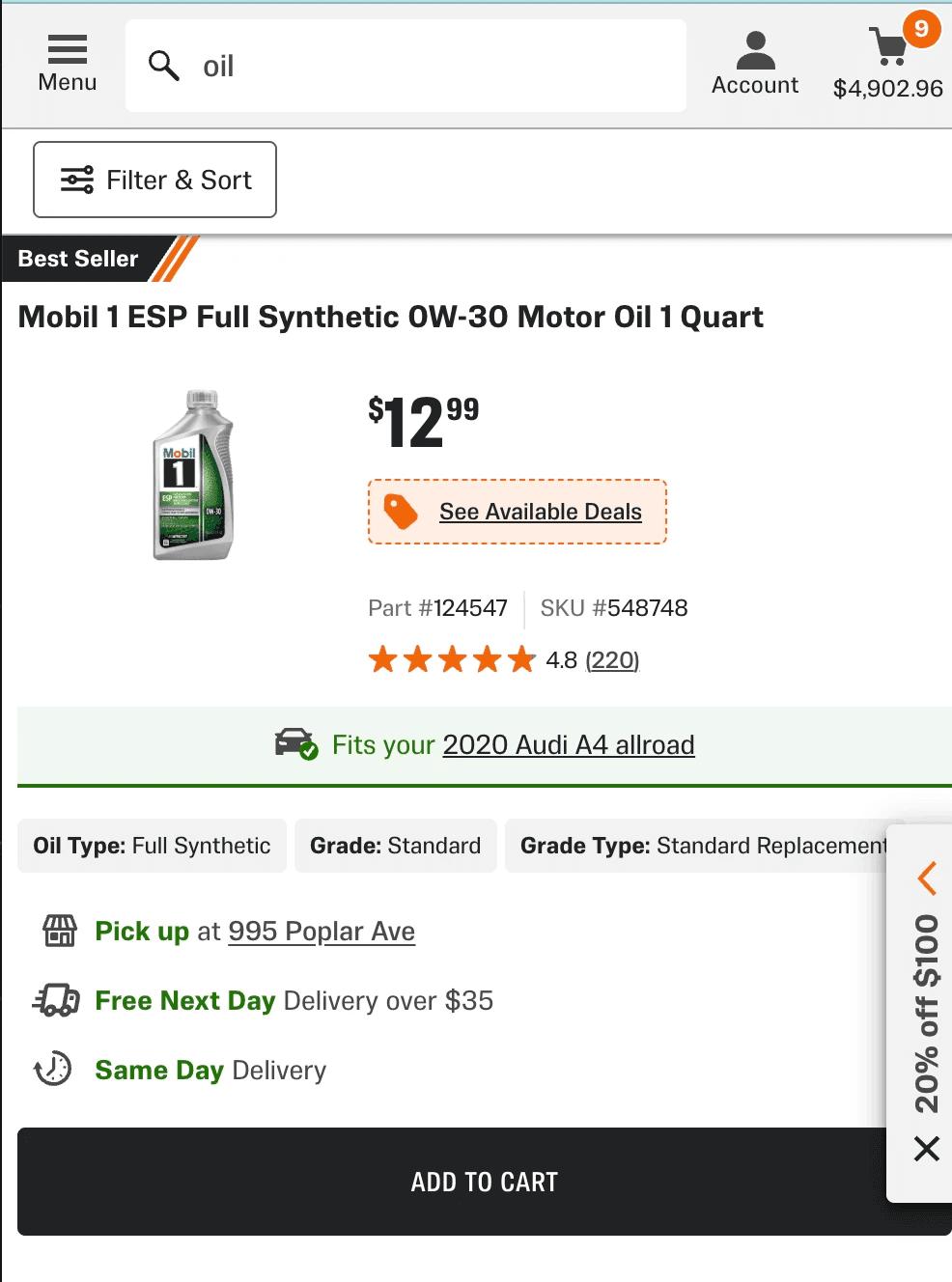
Deal Entry Points
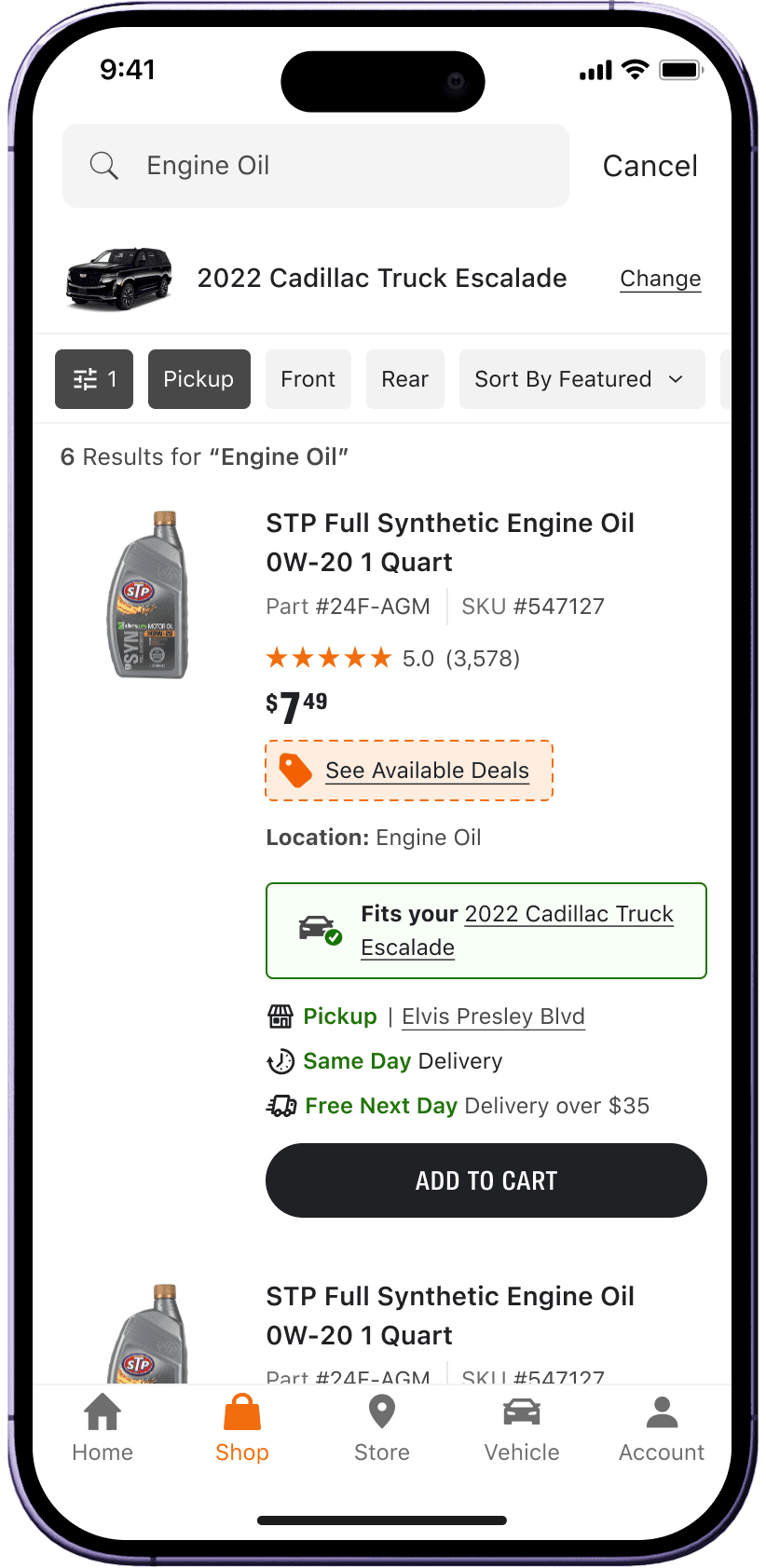
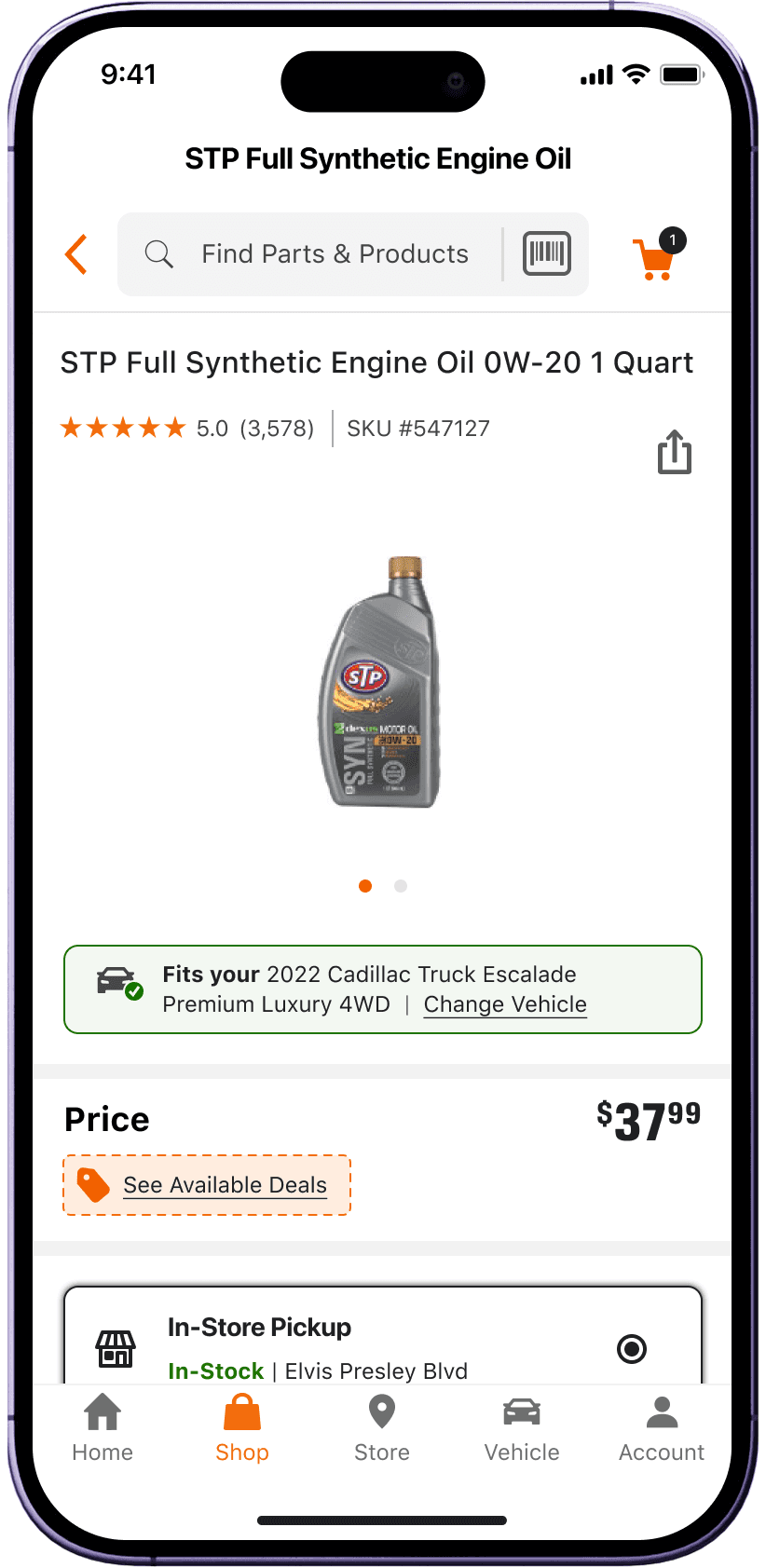
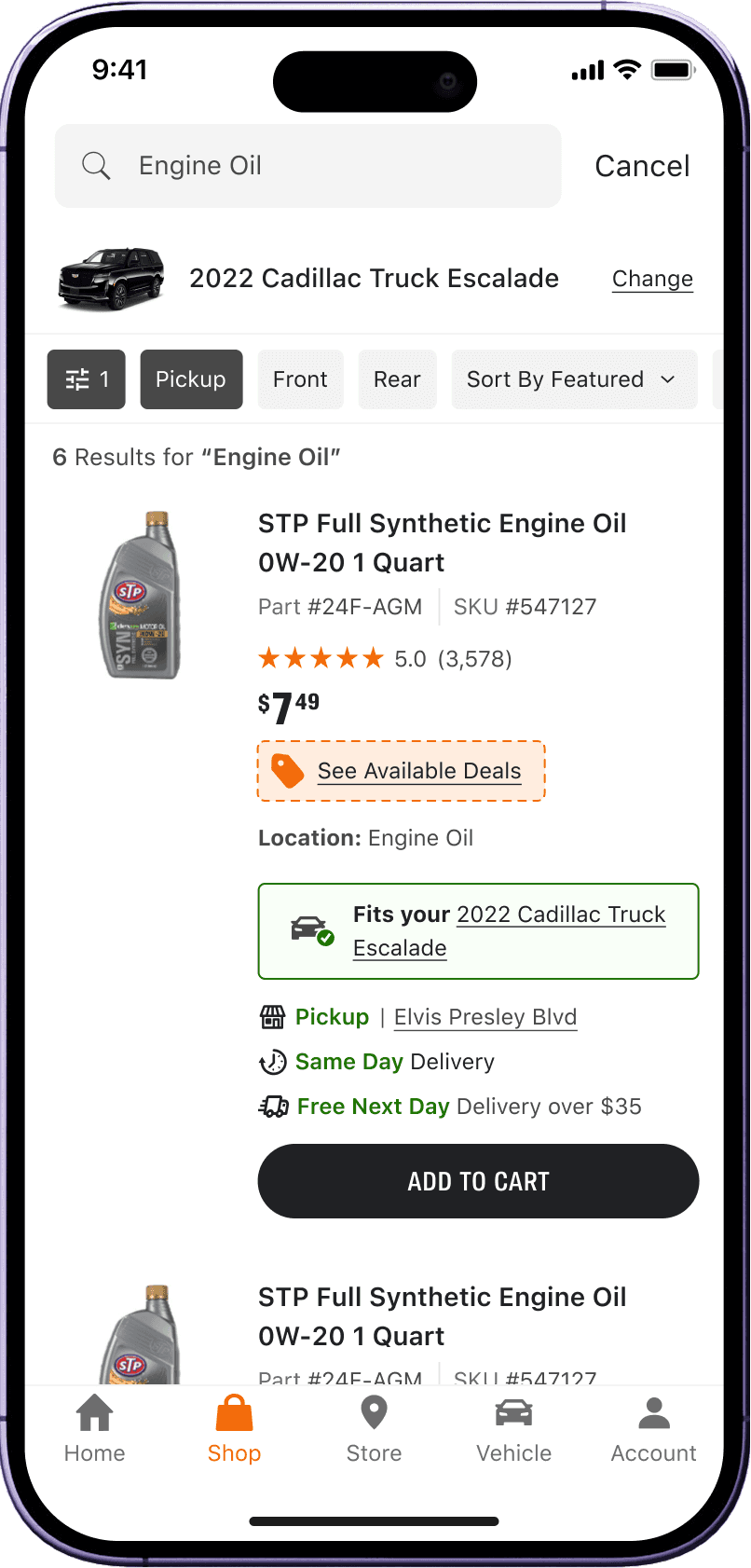
A unified entry point and updated “See Available Deals” badging on app and web focusing on:
Clear categorization.
Higher visibility for top‑performing bundles.
UI that resembles a coupon cutout, clear to users that it is clickable and in proximity to price.
Before (App)
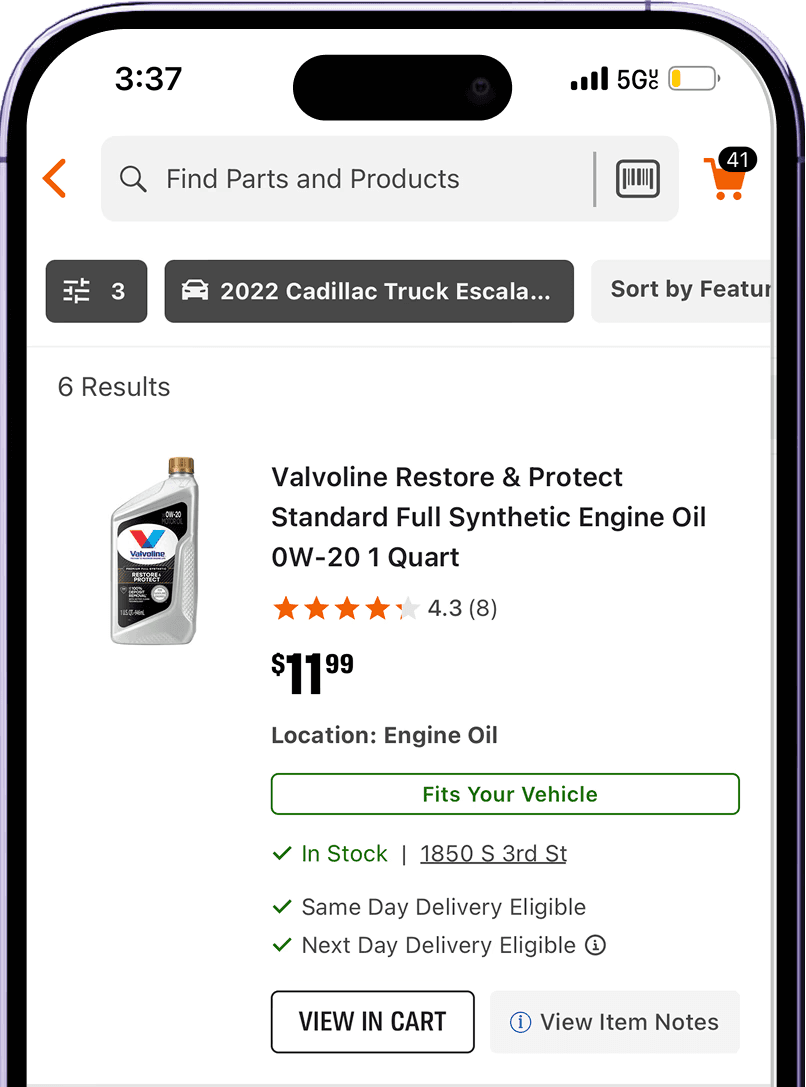
After (App)
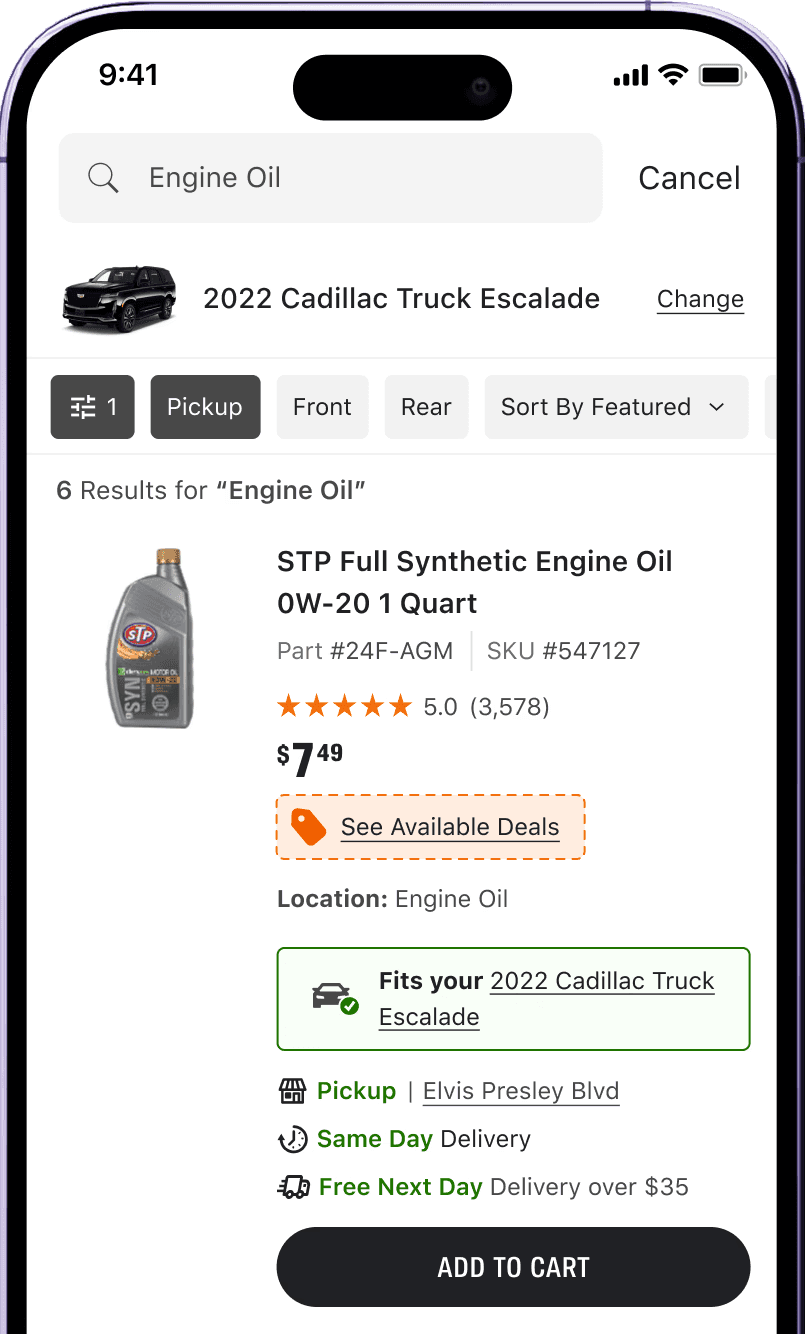
Before (Web)
After (Web)
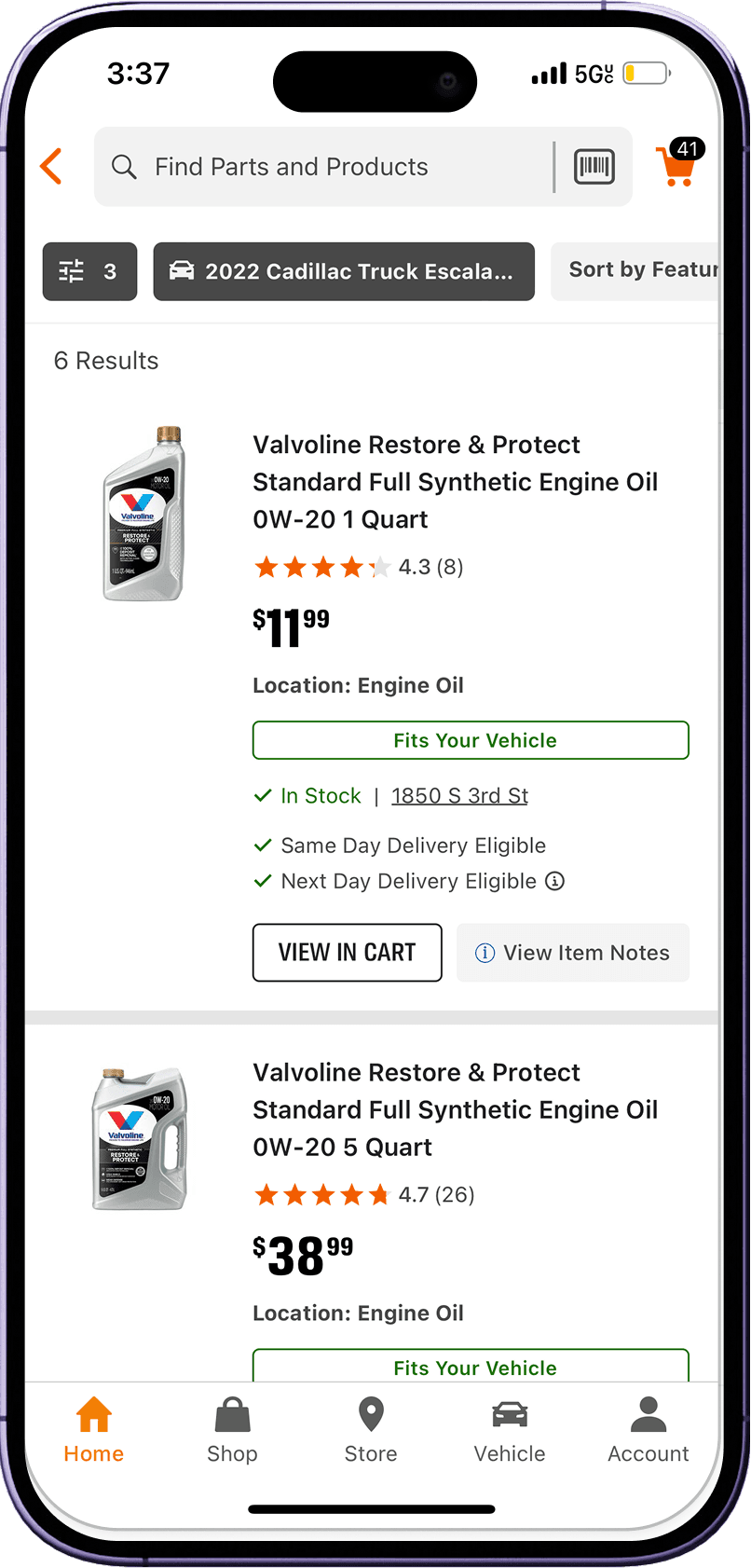
Deals Entry Points
A unified entry point and updated badging on mobile and web with:
Clear categorization.
Higher visibility for top‑performing bundles.
UI that resembles a coupon cutout, clear to users that it is clickable and in proximity to price.
Before (App)
After (App)
Before (Web)
After (Web)
Deals Entry Points
A unified entry point and updated badging on mobile and web with:
Clear categorization.
Higher visibility for top‑performing bundles.
UI that resembles a coupon cutout, clear to users that it is clickable and in proximity to price.
Before (App)
After (App)
Before (Web)
After (Web)
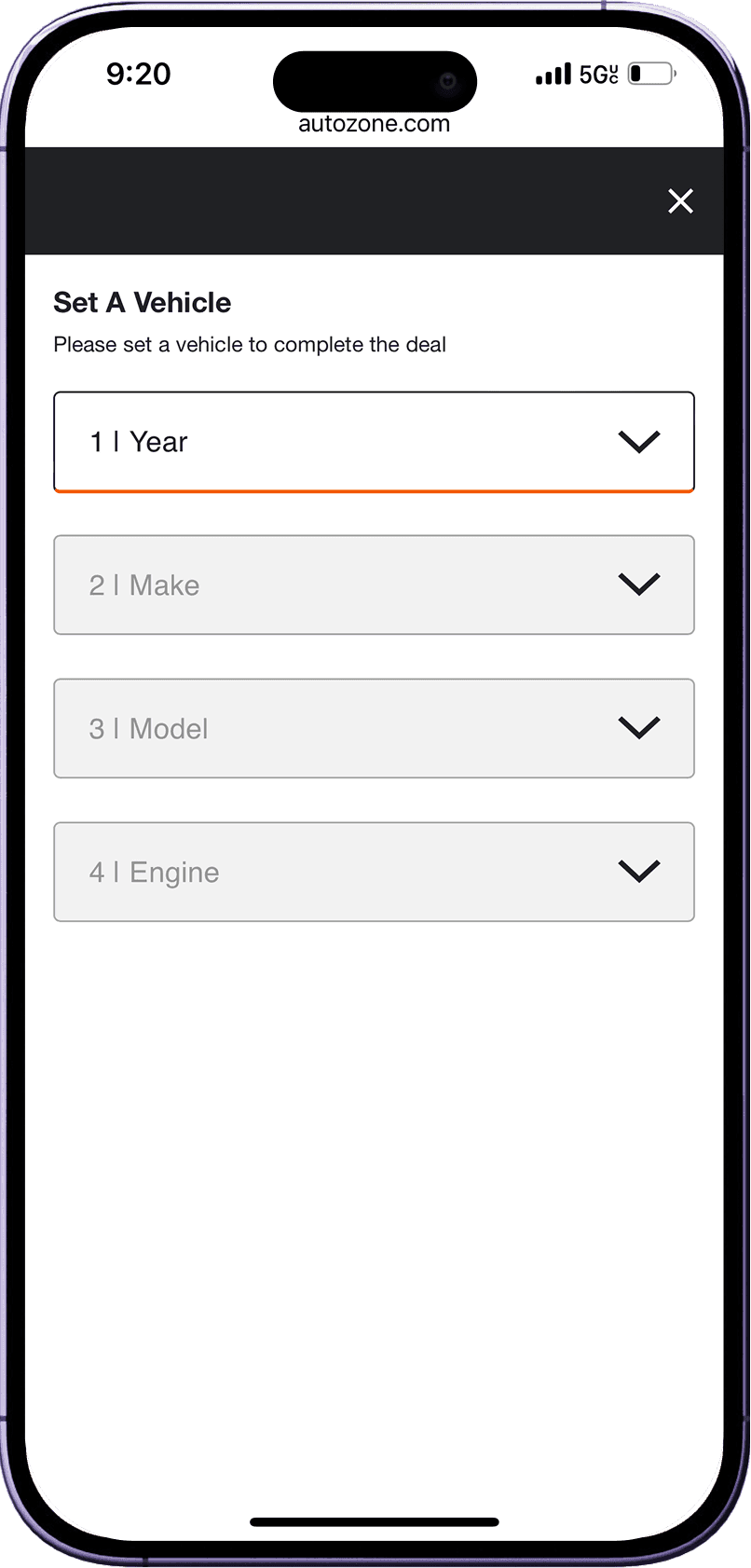
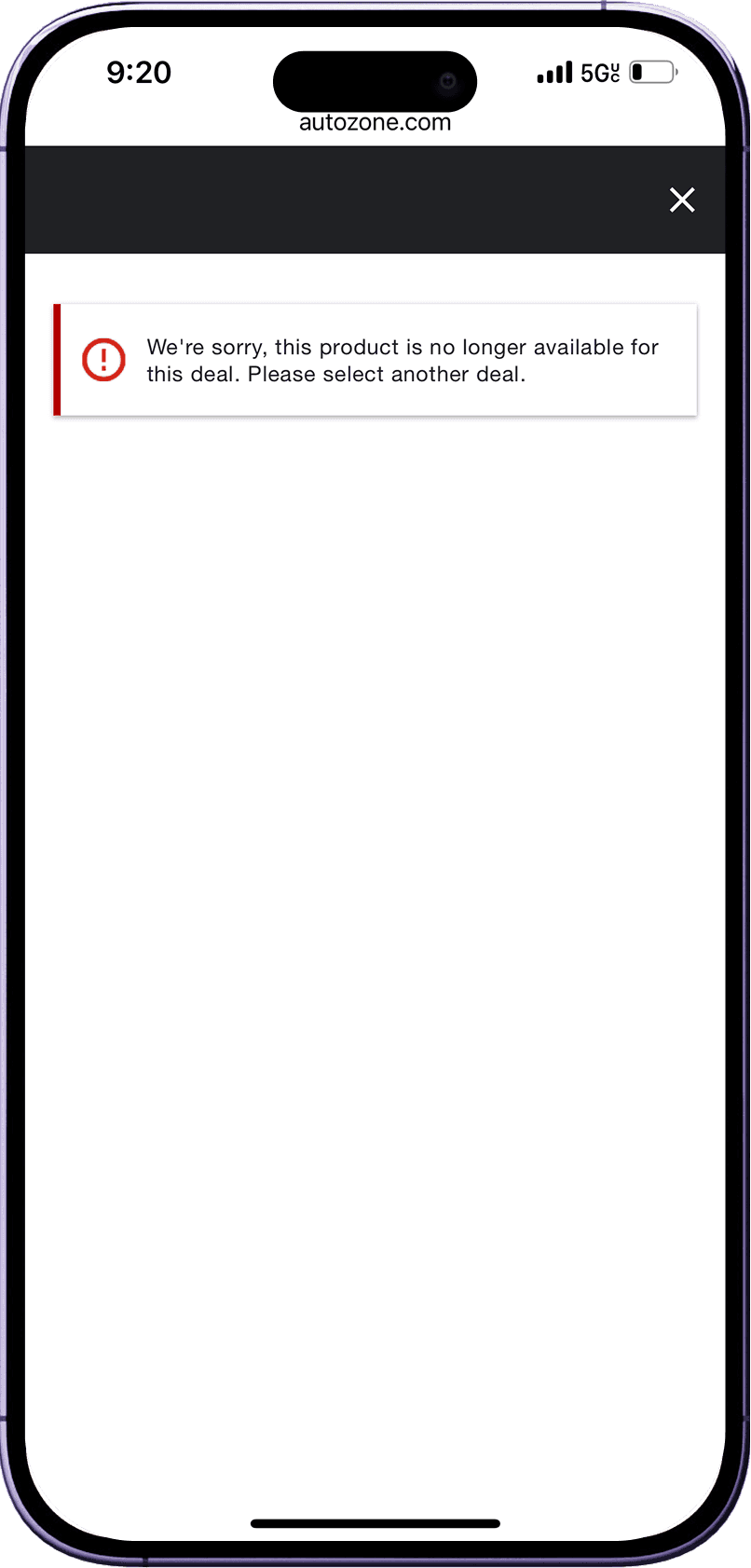
Decision to Remove Fulfillment Step
Users often browse Deals tab to plan for future shopping (UXR Dscout deals survey insights)
Removing the fulfillment type selection on web (pick up in store vs. delivery) at this step provides users with more product options and removes fulfillment dead ends & user frustration as seen below.
Before (Web)
Decision to Remove Fulfillment Step
Users often browse Deals tab to plan for future shopping (UXR Dscout deals survey insights)
Removing the fulfillment type selection (pick up in store vs. delivery) at this step provides users with more product options and removes fulfillment dead ends & user frustration as seen below.
Before (Web)
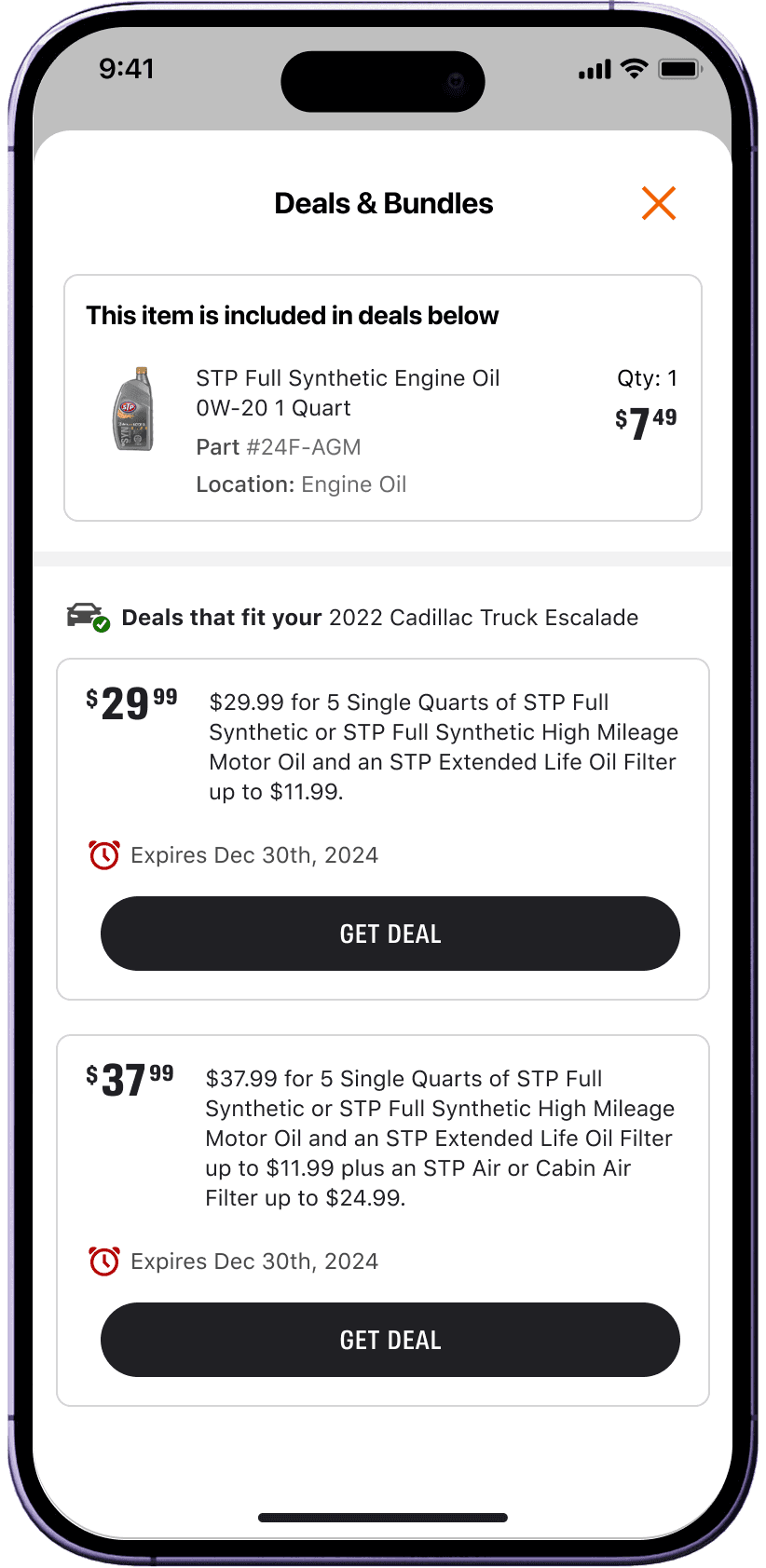
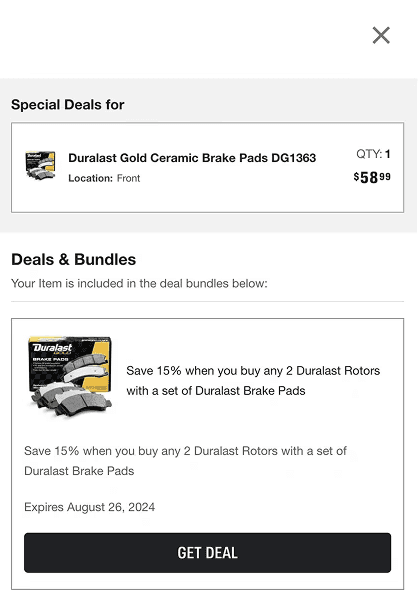
Deal Drawer
Redesigned for user comprehension:
Images were redundant - updated to only show at the top of the page.
Price comparison of single unit vs. deal package was updated.
Verbiage streamlined as much as possible with backend limitations - avoid redundancy.
Expiration date with new iconography suggested urgency.
Before (Web)

After (App)
Deal Drawer
Redesigned for user comprehension:
Images were redundant - updated to only show at the top of the page.
Price comparison of single unit vs. deal package was updated.
Verbiage streamlined as much as possible with backend limitations - avoid redundancy.
Before (Web)
After (App)
Decision to Remove Fulfillment Step
Users often browse Deals tab to plan for future shopping (UXR Dscout deals survey insights)
Removing the fulfillment type selection (pick up in store vs. delivery) at this step provides users with more product options and removes fulfillment dead ends & user frustration as seen below.
Before (Web)
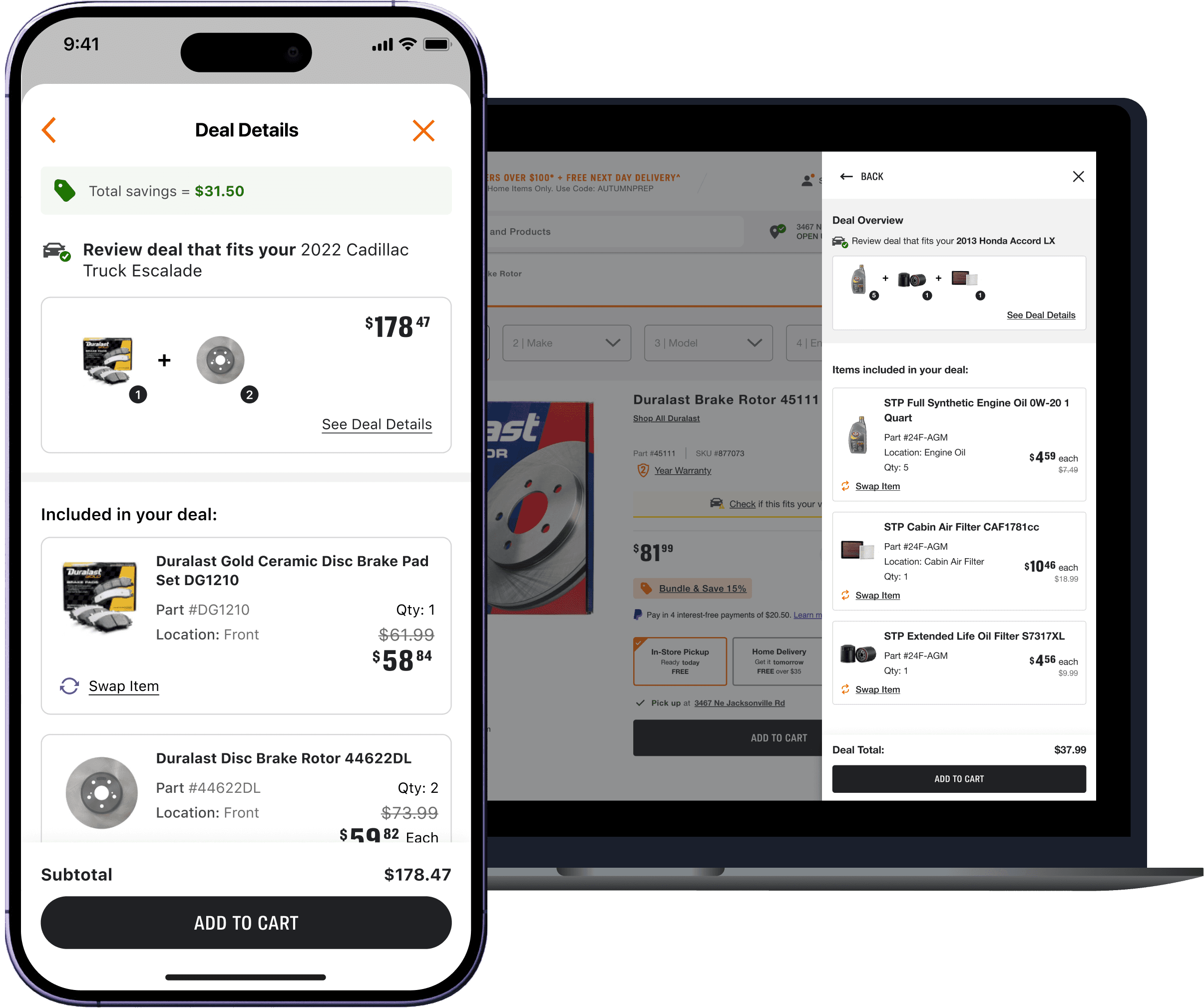
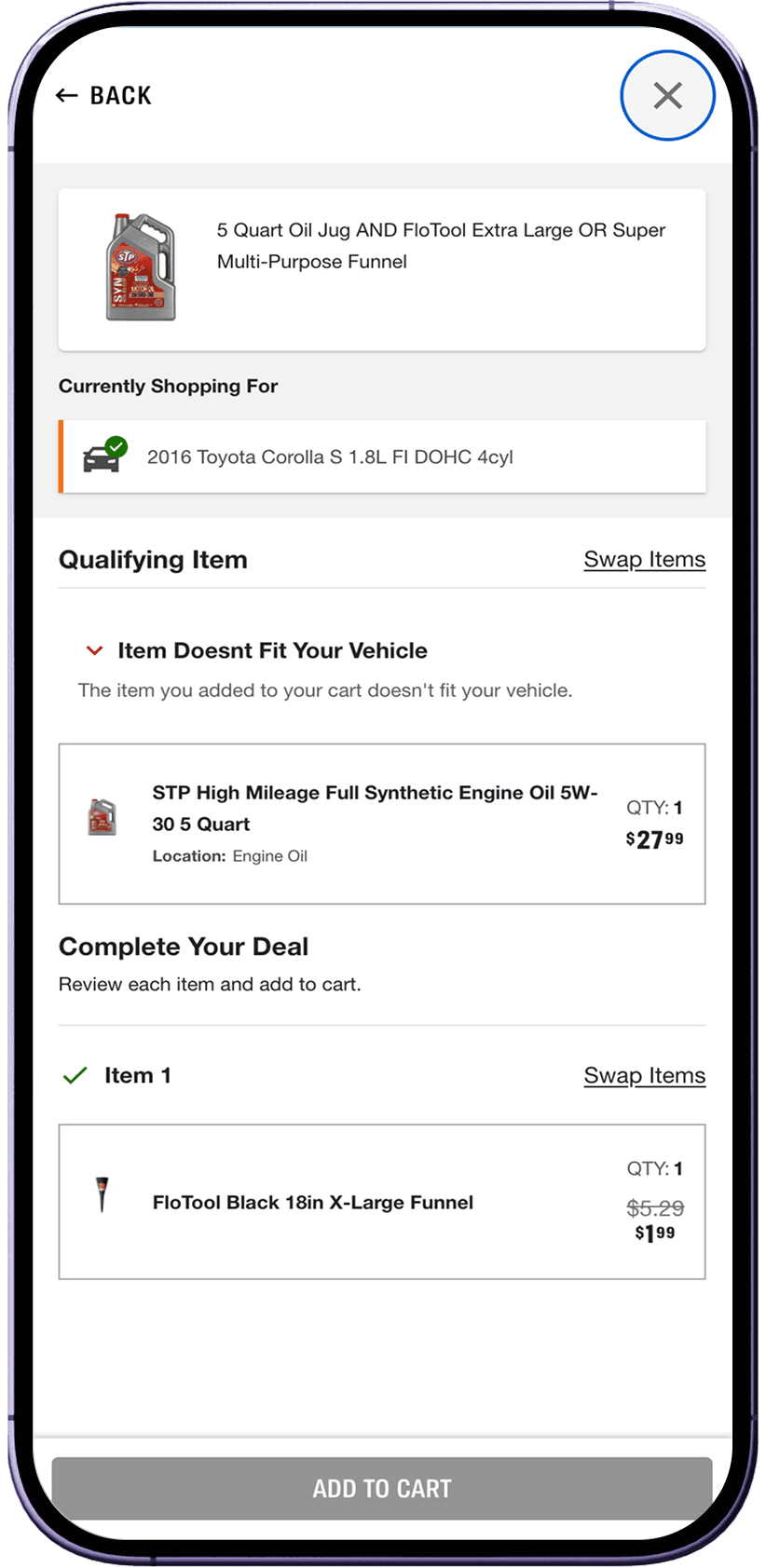
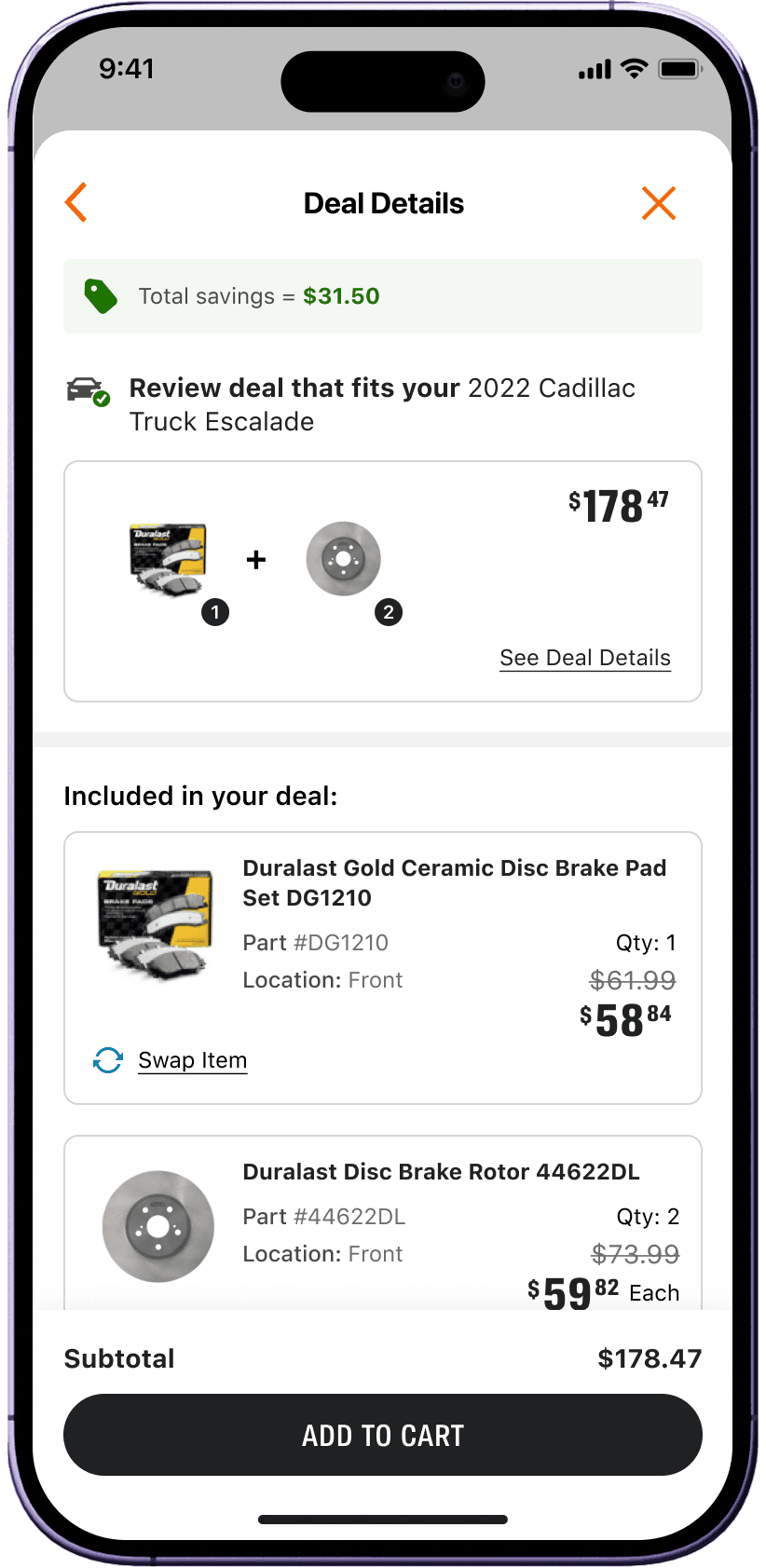
Review Deal
Redesigned for clarity and comprehension:
Plain‑language descriptions.
Detailed breakdown of included items.
Clear savings + comparison pricing.
Consistent component structure for future bundles.
Before (Web)
After (App)
Review Deal
Redesigned for clarity and comprehension:
Plain‑language descriptions.
Detailed breakdown of included items.
Clear savings + comparison pricing.
Consistent component structure for future bundles.
Before (Web)
After (App)
Deal Drawer
Redesigned for user comprehension:
Images were redundant - updated to only show at the top of the page.
Price comparison of single unit vs. deal package was updated.
Verbiage streamlined as much as possible with backend limitations - avoid redundancy.
Before (Web)
After (App)
Review Deal
Redesigned for clarity and comprehension:
Plain‑language descriptions.
Detailed breakdown of included items.
Clear savings + comparison pricing.
Consistent component structure for future bundles.
Before (Web)
After (App)
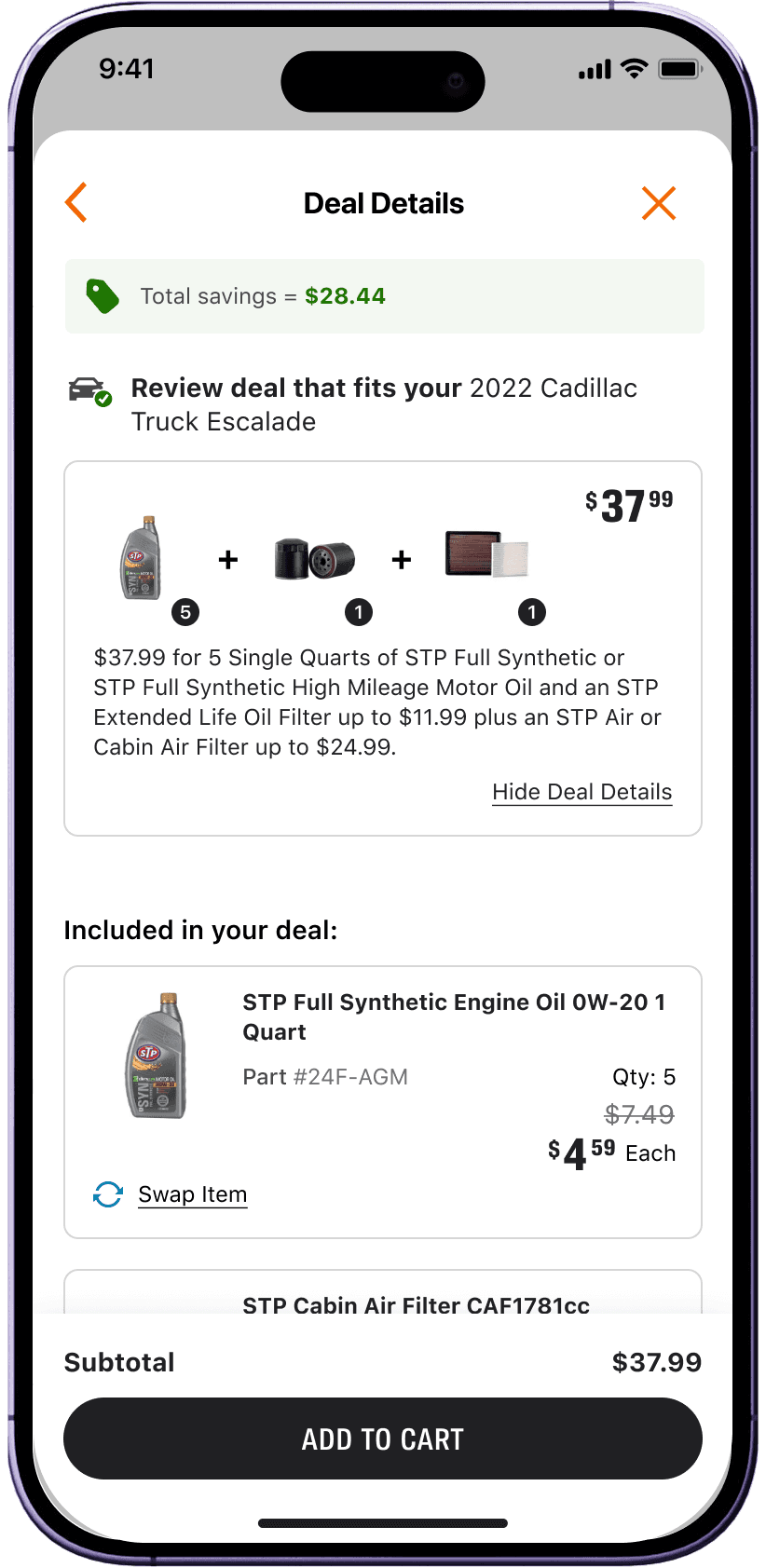
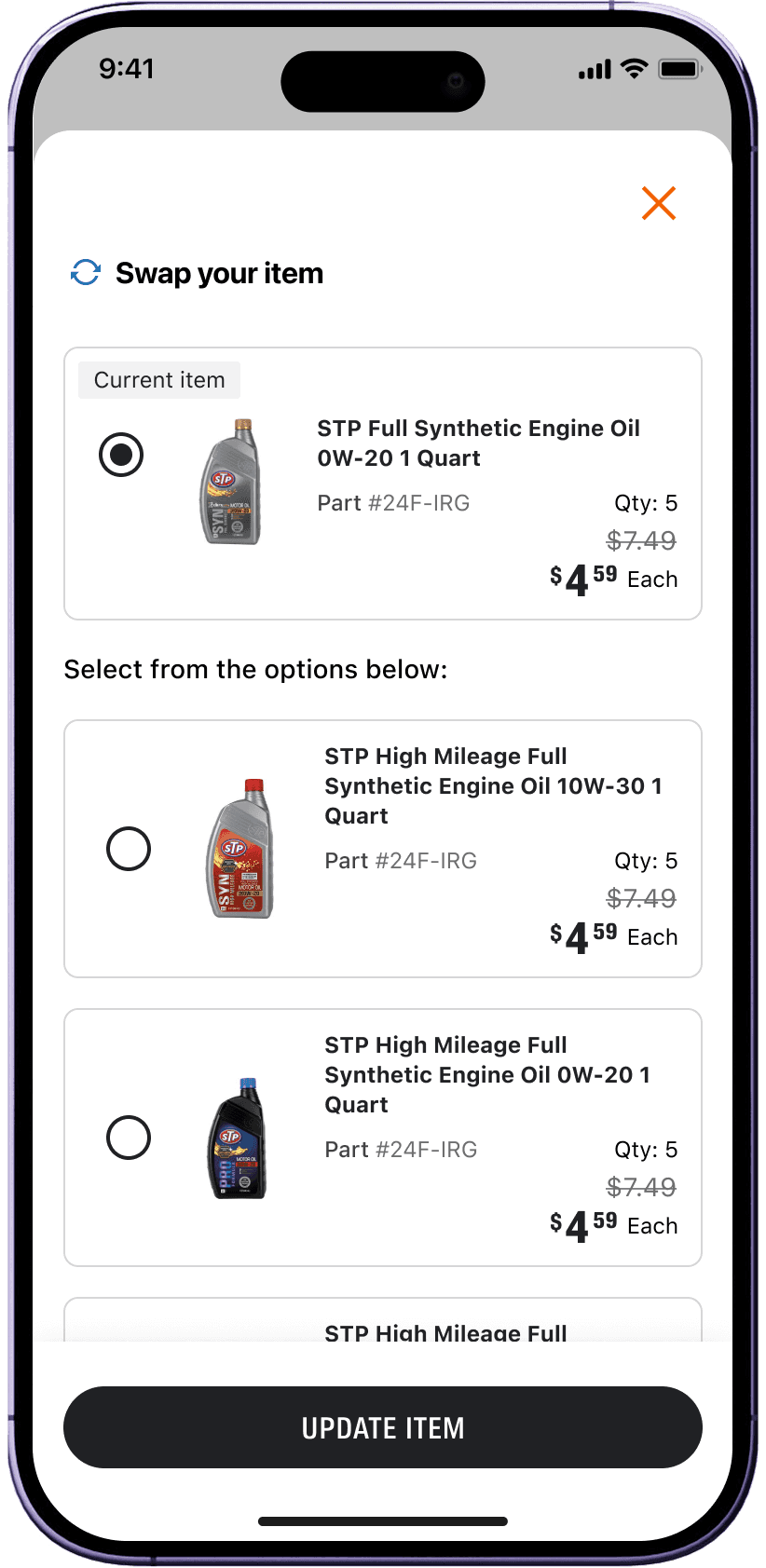
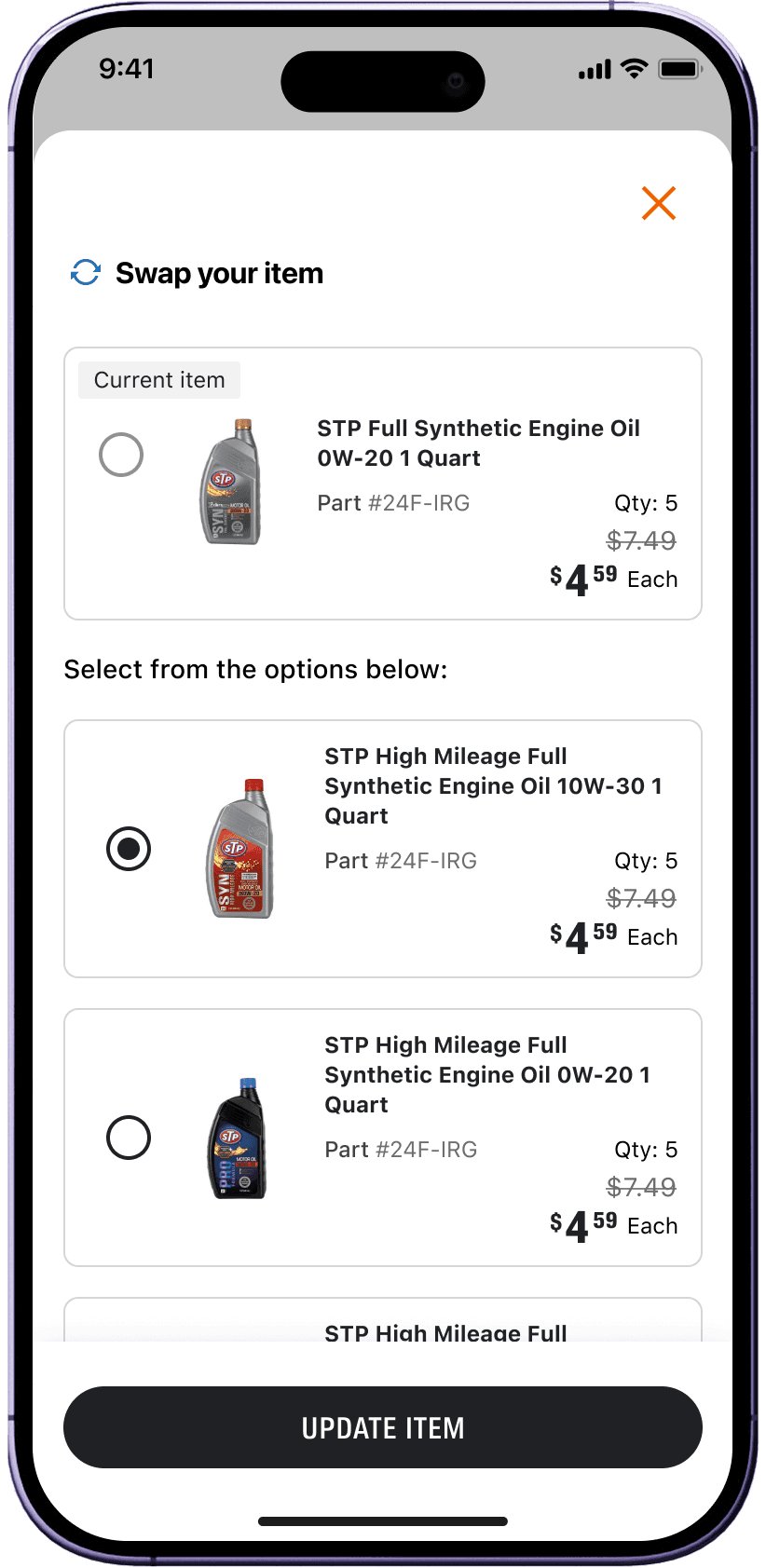
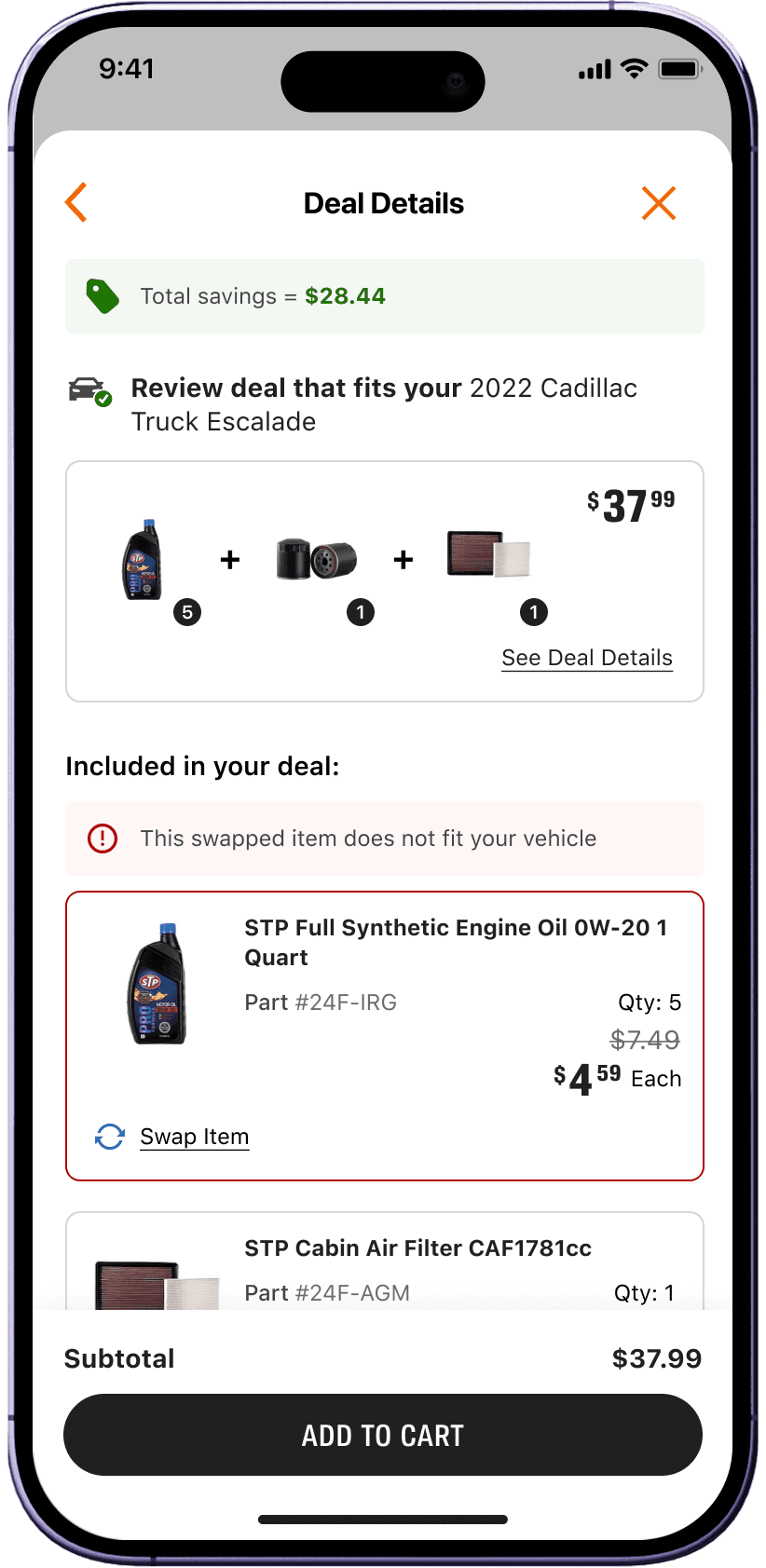
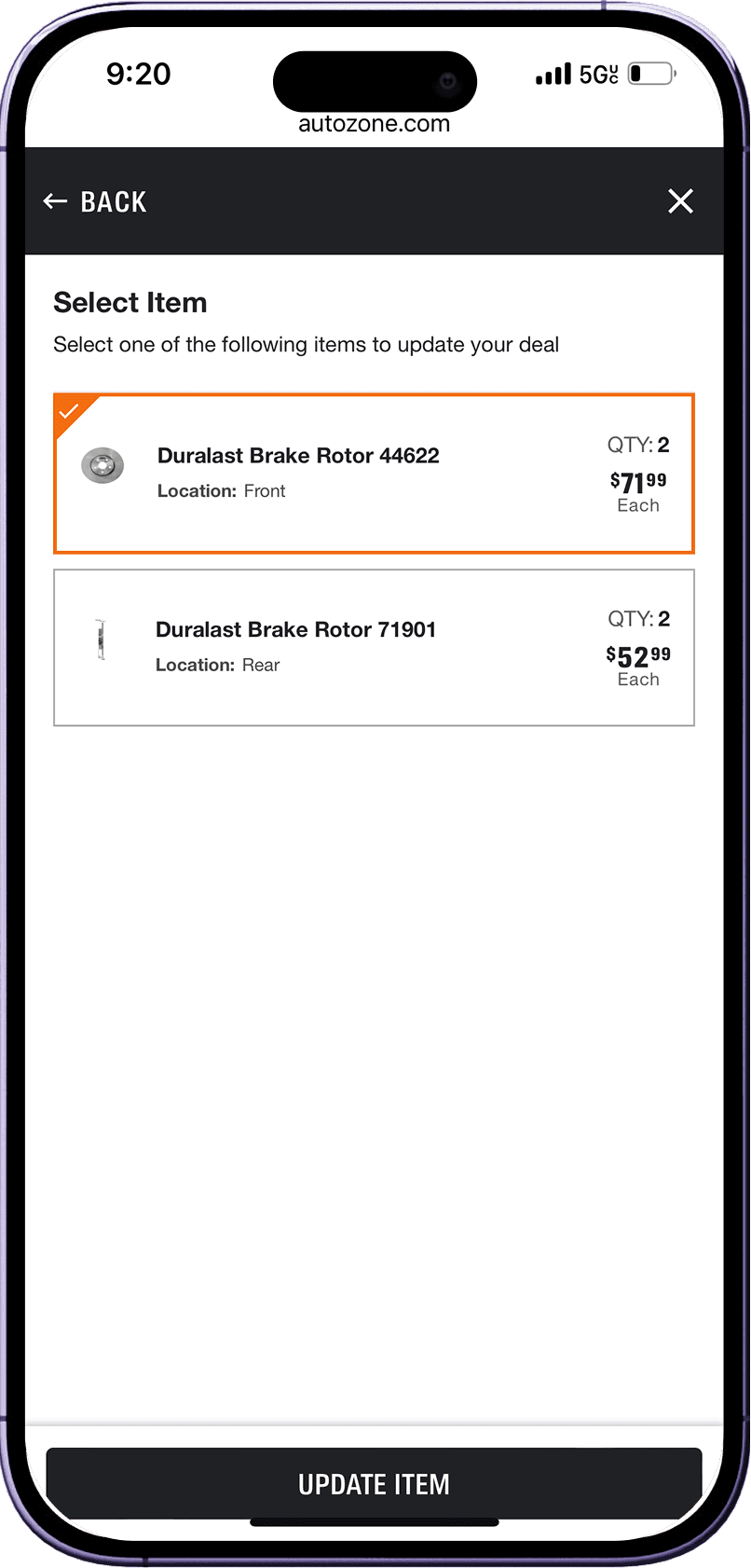
Swapping Items within Deal
Redesigned for user comprehension:
"Current item" is kept at the top of the page to aid users in comparing and contrasting swapped item.
Part number included - UXR insights showed that users shopping in store heavily rely on part numbers to find the right products that fit their vehicle (thus lowering returns / user frustration).
Before (Web)
After (App)
Swapping Items in Deal
Redesigned for user comprehension:
"Current item" is kept at the top of the page to aid users in comparing and contrasting swapped item.
Part number included - UXR insights showed that users shopping in store heavily rely on part numbers to find the right products that fit their vehicle (thus lowering returns / user frustration).
Before (Web)
After (App)
Swapping Items in Deal
Redesigned for user comprehension:
"Current item" is kept at the top of the page to aid users in comparing and contrasting swapped item.
Part number included - UXR insights showed that users shopping in store heavily rely on part numbers to find the right products that fit their vehicle (thus lowering returns / user frustration).
Before (Web)
After (App)
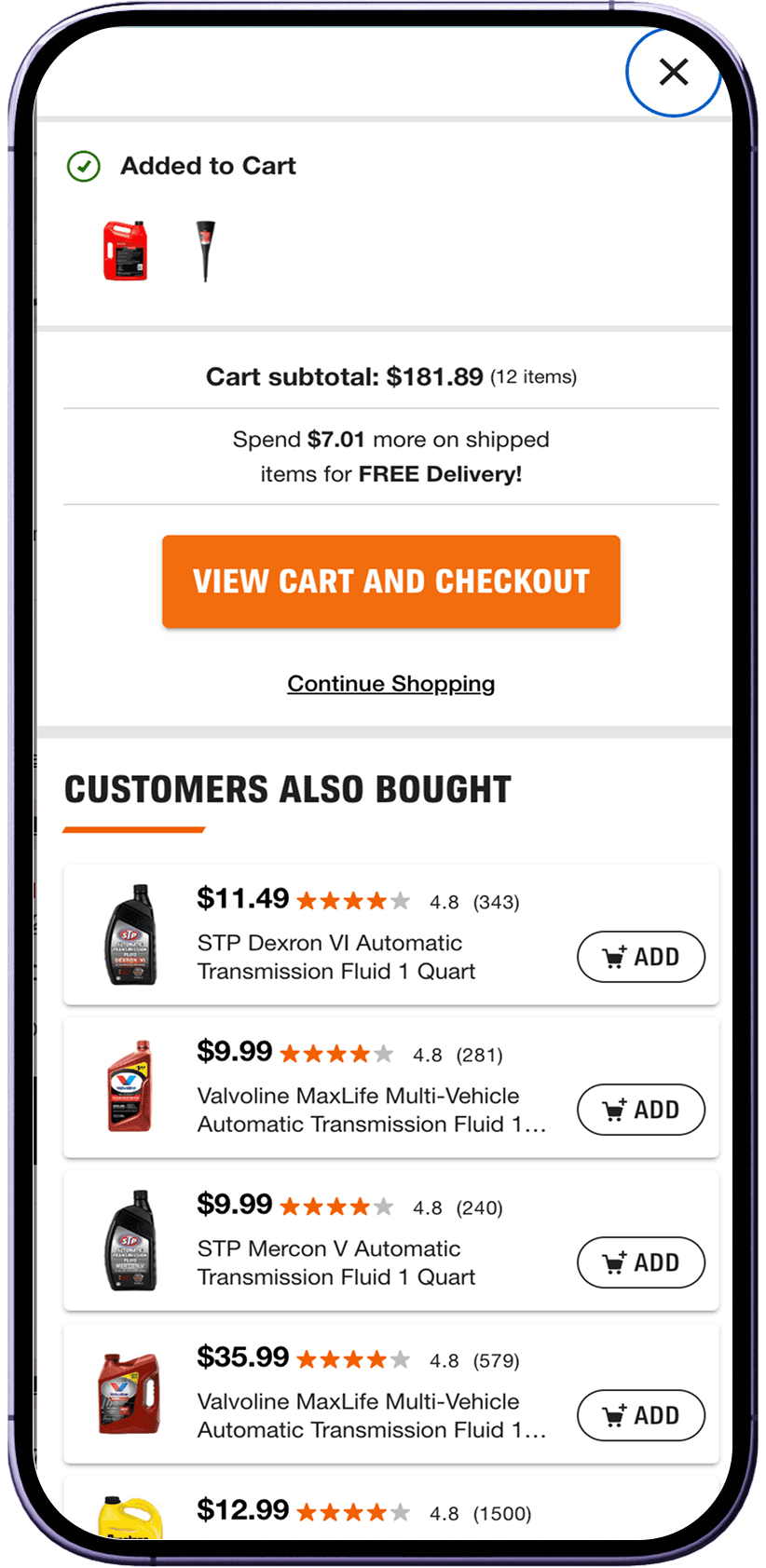
Adding Deal to Cart
Guided, intuitive activation:
Added to cart clarity and improved information hierarchy.
Deal details, images, and final price are clearly outlined.
Best practice to not add product recommendations at this step - goal is to ensure user understands deal value.
User can go to cart or continue shopping.
Before (Web)
After (App)
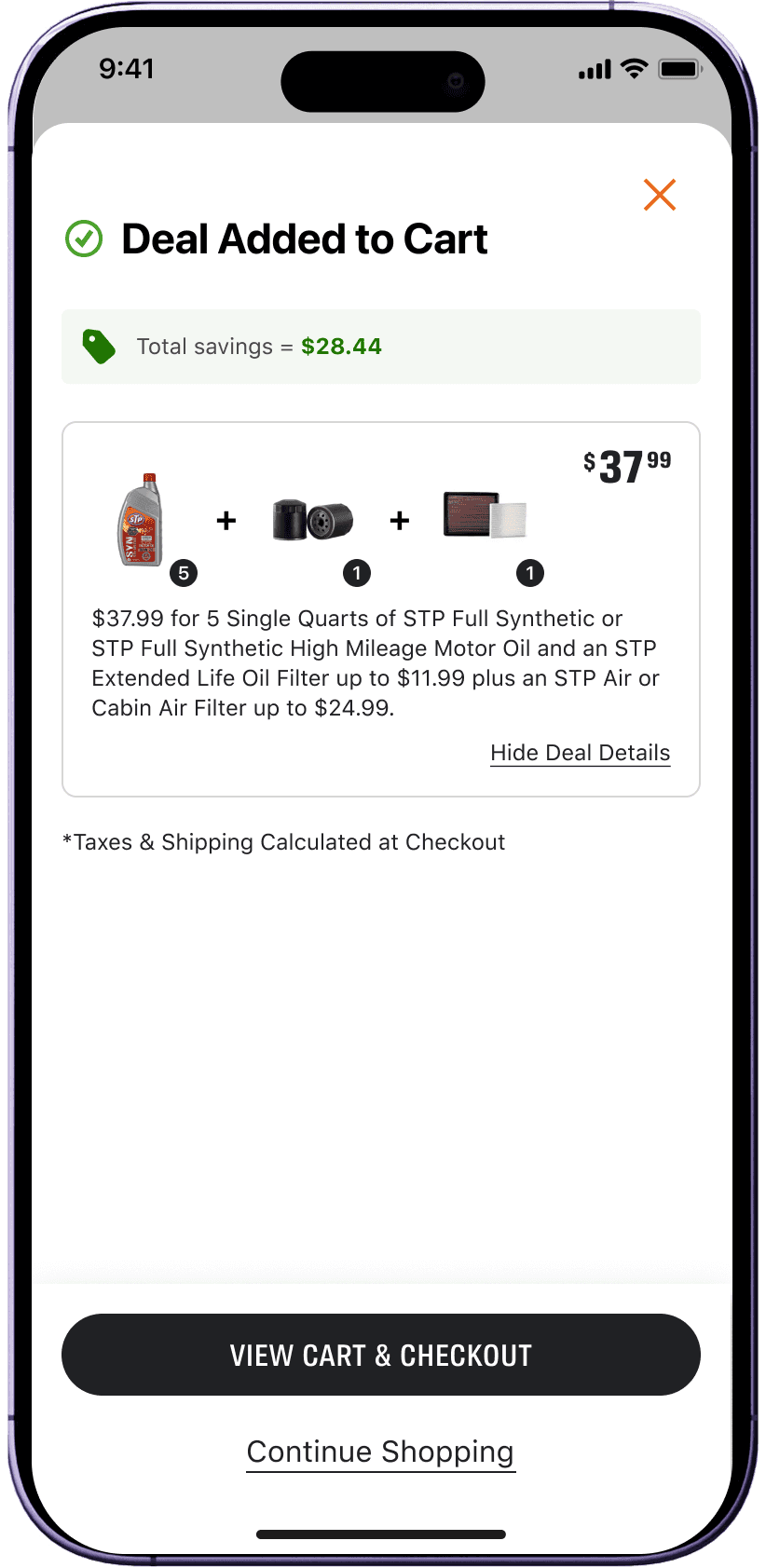
Adding Deal to Cart
Guided, intuitive activation:
Added to cart clarity and improved information hierarchy.
Deal details, images, and final price are clearly outlined.
Best practice to not add product recommendations at this step - goal is to ensure user understands deal value.
User can go to cart or continue shopping.
Before (Web)
After (App)
Adding Deal to Cart
Guided, intuitive activation: Added-to-cart clarity and improved information hierarchy. Deal details, images, and final price are clearly outlined. Best practice is to not add product recommendations at this step — the goal is to ensure users understand deal value. Users can go to cart or continue shopping.
Before (Web)
After (App)
Cross‑Platform Alignment
Web + mobile now share the same mental model
Scalable components support new deal formats
Updates made to various pages & flows:
Shelf Page, Product Description Page, Deals Flow, Cart & Checkout
Cross‑Platform Alignment
Web + mobile now share the same mental model
Scalable components support new deal formats.
Updates made to various pages & flows:
Shelf Page, Product Description Page, Deals Flow, Cart & Checkout.
Cross‑Platform Alignment
Web + mobile now share the same mental model:
Scalable components support new deal formats.
Updates made to various pages & flows:
Shelf Page, Product Description Page, Deals Flow, Cart & Checkout.
Post Redesign Usability Insights
Post Redesign Usability Insights
Users were now able to easily find the deals badging as it was in proximity with price and fulfillment selectors.
The UI was easy to find and 98% of users found it within 2 seconds.
Success rate 13/18 participants.
Cart - Only 4 out of 18 users were able to successfully correct their error state and proceed with checkout.
When trying to identify what’s contained in their deal, users often struggled to understand the language used to describe the deal on the first page of the flyout.
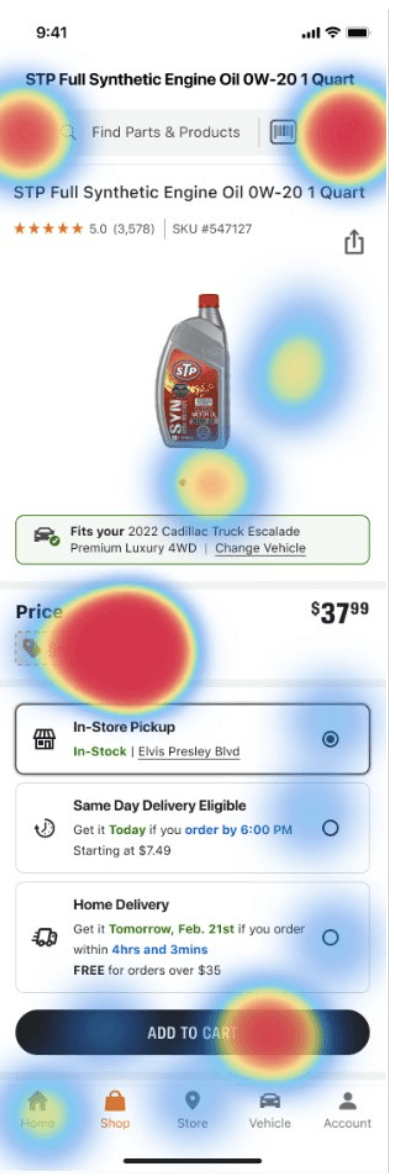
Heat maps show that users found deals badging post redesign with ease
Heat maps show that users found deals badging post redesign with ease
Heat maps show that users found deals badging post redesign with ease
07 • Impact & Results ——————
07 • Impact & Results ——————
This wasn't a UX improvement.
This wasn't a UX improvement.
It was a business transformation.
It was a business transformation.
+13 Million
+13 Million
+13 Million
first-year revenue
first-year revenue
first-year revenue
6X
6X
6X
Conversion lift
Conversion lift
Conversion lift
+14%
+14%
+14%
YoY app sales
YoY app sales
YoY app sales
+3.4%
+3.4%
+3.4%
average order value (AOV)
average order value (AOV)
average order value (AOV)
08 • Reflection ——————
What I learned leading this
What I learned leading this
at the senior level.
at the senior level.
The hardest parts weren't visual. They were organizational. Aligning fragmented teams, holding a tradeoff decision under real pressure, and designing a system flexible enough for a business that was still figuring out what it wanted from deals.
The hardest parts weren't visual. They were organizational. Aligning fragmented teams, holding a tradeoff decision under real pressure, and designing a system flexible enough for a business that was still figuring out what it wanted from deals.
01 - Strategic ownership
01 - Strategic ownership
Collaborated with product to determine the problem. I brought a point of view, pressure-tested it with research, and aligned the team around it. The design was better because the strategy was clear — and the strategy was clear because I treated it as part of my process.
Collaborated with product to determine the problem. I brought a point of view, pressure-tested it with research, and aligned the team around it. The design was better because the strategy was clear — and the strategy was clear because I treated it as part of my process.
Collaborated with product to determine the problem. I brought a point of view, pressure-tested it with research, and aligned the team around it. The design was better because the strategy was clear — and the strategy was clear because I treated it as part of my process.
02 - Cross-functional influence without authority
02 - Cross-functional influence without authority
Aligning product, engineering, research, analytics, and marketing — with competing priorities — required communicating with precision and advocating with evidence. Design decisions landed because they were grounded in data and framed in business terms.
Aligning product, engineering, research, analytics, and marketing — with competing priorities — required communicating with precision and advocating with evidence. Design decisions landed because they were grounded in data and framed in business terms.
Aligning product, engineering, research, analytics, and marketing — with competing priorities — required communicating with precision and advocating with evidence. Design decisions landed because they were grounded in data and framed in business terms.
03 - Tradeoff judgement
03 - Tradeoff judgement
The phased launch wasn't the easy call. It required holding a position, absorbing pushback, and trusting the system design we'd built. Getting comfortable with "the right decision isn't always the complete decision" is a senior-level skill I sharpened here.
The phased launch wasn't the easy call. It required holding a position, absorbing pushback, and trusting the system design we'd built. Getting comfortable with "the right decision isn't always the complete decision" is a senior-level skill I sharpened here.
The phased launch wasn't the easy call. It required holding a position, absorbing pushback, and trusting the system design we'd built. Getting comfortable with "the right decision isn't always the complete decision" is a senior-level skill I sharpened here.
04 - System thinking at scale
04 - System thinking at scale
Every pattern had to work for deals we hadn't designed yet. That meant designing with constraints in mind. What's the most flexible version that doesn't sacrifice clarity? I got better at holding that tension throughout this project.
Every pattern had to work for deals we hadn't designed yet. That meant designing with constraints in mind. What's the most flexible version that doesn't sacrifice clarity? I got better at holding that tension throughout this project.
Every pattern had to work for deals we hadn't designed yet. That meant designing with constraints in mind. What's the most flexible version that doesn't sacrifice clarity? I got better at holding that tension throughout this project.
Technical limitations outside
Technical limitations outside
of our control
of our control
Not every decision shipped as designed. Backend limitations influenced the savings banner, and eCommerce pod constraints shaped the cart badge, both intentionally deferred to Phase 2 to protect the launch window.
The endpoint supporting final price with savings couldn't be surfaced at the add-to-cart confirmation stage. Users could only view their savings once inside the cart.
Deal messaging optimization remains a known opportunity, pending a backend update to simplify and clarify verbiage for end users.
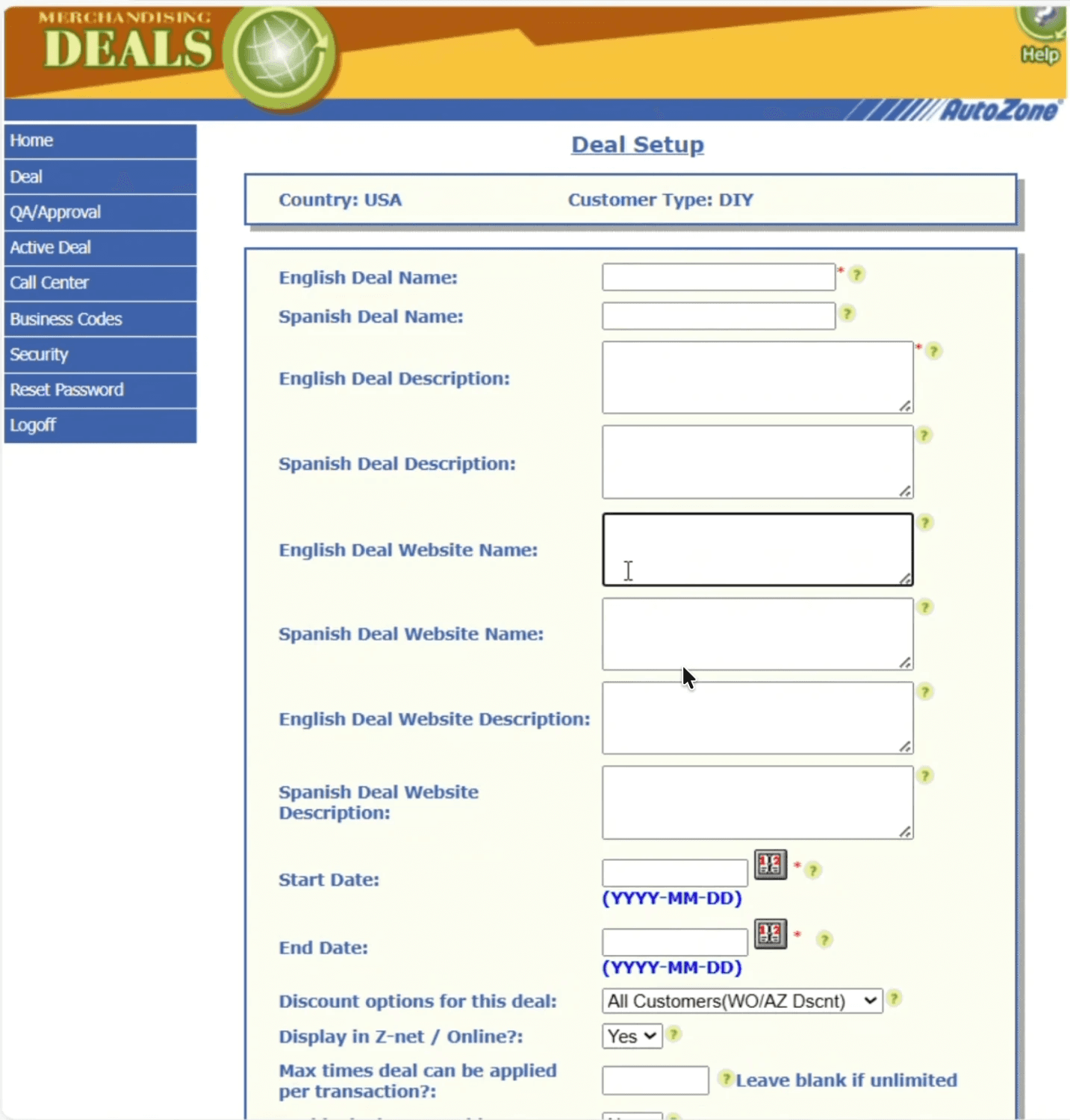
Our deals system runs on a legacy merchandising platform that limits how deal content, pricing, and inclusions can be input, updated, and displayed. Unfortunately creating friction between what we design and what can actually ship. (See image below for reference)
Not every decision shipped as designed. Backend limitations influenced the savings banner, and eCommerce pod constraints shaped the cart badge, both intentionally deferred to Phase 2 to protect the launch window.
The endpoint supporting final price with savings couldn't be surfaced at the add-to-cart confirmation stage. Users could only view their savings once inside the cart.
Deal messaging optimization remains a known opportunity, pending a backend update to simplify and clarify verbiage for end users.
Our deals system runs on a legacy merchandising platform that limits how deal content, pricing, and inclusions can be input, updated, and displayed. Unfortunately creating friction between what we design and what can actually ship. (See image below for reference)
Next Phase Focus:
Address Phase 2 technical debt on the savings banner, cart badge, and deals system in close collaboration with engineering.
Resist the urge to over-design. What shipped is working. The next phase is about targeted improvements, not a redesign.
Let the data lead. Dig into post-launch analytics to identify where users drop off, hesitate, or succeed, and let that shape priorities.
Treating deal comprehension as a conversion problem & not a visual design problem, turned a broken feature into AutoZone's fastest-growing channel
Treating deal comprehension as a conversion problem & not a visual design problem, turned a broken feature into AutoZone's fastest-growing channel
More of my work
Websites
Building a Research-Backed EdTech Platform for Cognitive Toybox
Led a team of 5 UX/UI designers to design a platform helping educators unlock how young children learn through play.
February - June 2023
•
Lead UX/UI Designer
Visit Website

Brand Identity & Web Presence for Calago Films
From zero brand foundation to a professional web presence — end-to-end.
April 2023 - September 2025
•
Product Designer
Visit Website

Website Redesign for South Side Wildcats
A Memphis nonprofit building futures for student-athletes deserved a website as purposeful as their mission.
February 2024
•
Product Designer
Visit Website
NDA-protected; details available upon request.

Phase 2: BiZi
Led UX strategy to scale Bizi's MVP educational platform for adoption across 20–25 schools, designing an admin and KG–2 interface, synthesizing field study insights, and driving UI/UX improvements informed by direct user feedback.
May - August 2024
•
Product Designer

More of my work
Brand Identity & Web Presence for Calago Films
From zero brand foundation to a professional web presence — end-to-end.
April 2023 - September 2025
•
Product Designer
Visit Website
Building a Research-Backed EdTech Platform for Cognitive Toybox
Led a team of 5 UX/UI designers to design a platform helping educators unlock how young children learn through play.
February - June 2023
•
Lead UX/UI Designer
Visit Website
Website Redesign for South Side Wildcats
A Memphis nonprofit building futures for student-athletes deserved a website as purposeful as their mission.
February 2024
•
Product Designer
Visit Website
Phase 2: BiZi
Led UX strategy to scale Bizi's MVP educational platform for adoption across 20–25 schools, designing an admin and KG–2 interface, synthesizing field study insights, and driving UI/UX improvements informed by direct user feedback.
May - August 2024
•
Product Designer
NDA Case Study
Websites
Building a Research-Backed EdTech Platform for Cognitive Toybox
Led a team of 5 UX/UI designers to design a platform helping educators unlock how young children learn through play.
February - June 2023
•
Lead UX/UI Designer
Visit Website
Brand Identity & Web Presence for Calago Films
From zero brand foundation to a professional web presence — end-to-end.
April 2023 - September 2025
•
Product Designer
Visit Website
Website Redesign for South Side Wildcats
A Memphis nonprofit building futures for student-athletes deserved a website as purposeful as their mission.
February 2024
•
Product Designer
Visit Website
Phase 2: BiZi
NDA-protected; details available upon request.
Led UX strategy to scale Bizi's MVP educational platform for adoption across 20–25 schools, designing an admin and KG–2 interface, synthesizing field study insights, and driving UI/UX improvements informed by direct user feedback.
May - August 2024
•
Product Designer
More of my work
Building a Research-Backed EdTech Platform for Cognitive Toybox
Led a team of 5 UX/UI designers to design a platform helping educators unlock how young children learn through play.
February - June 2023
•
Lead UX/UI Designer
Visit Website
Brand Identity & Web Presence for Calago Films
From zero brand foundation to a professional web presence — end-to-end.
April 2023 - September 2025
•
Product Designer
Visit Website
Website Redesign for South Side Wildcats
A Memphis nonprofit building futures for student-athletes deserved a website as purposeful as their mission.
February 2024
•
Product Designer
Visit Website
Phase 2: BiZi
NDA-protected; details available upon request.
Led UX strategy to scale Bizi's MVP educational platform for adoption across 20–25 schools, designing an admin and KG–2 interface, synthesizing field study insights, and driving UI/UX improvements informed by direct user feedback.
May - August 2024
•
Product Designer